What Is an Autonomous Mobile Space? Core Concepts Behind City Robotics
An autonomous mobile space is a self-driving vehicle designed around the usable space inside it — the seats, shelves, counter or room — rather than around the driving task alone. In the City Robotics category, the vehicle is the delivery format for a service: passenger transit, on-demand retail, café service or personal mobility.
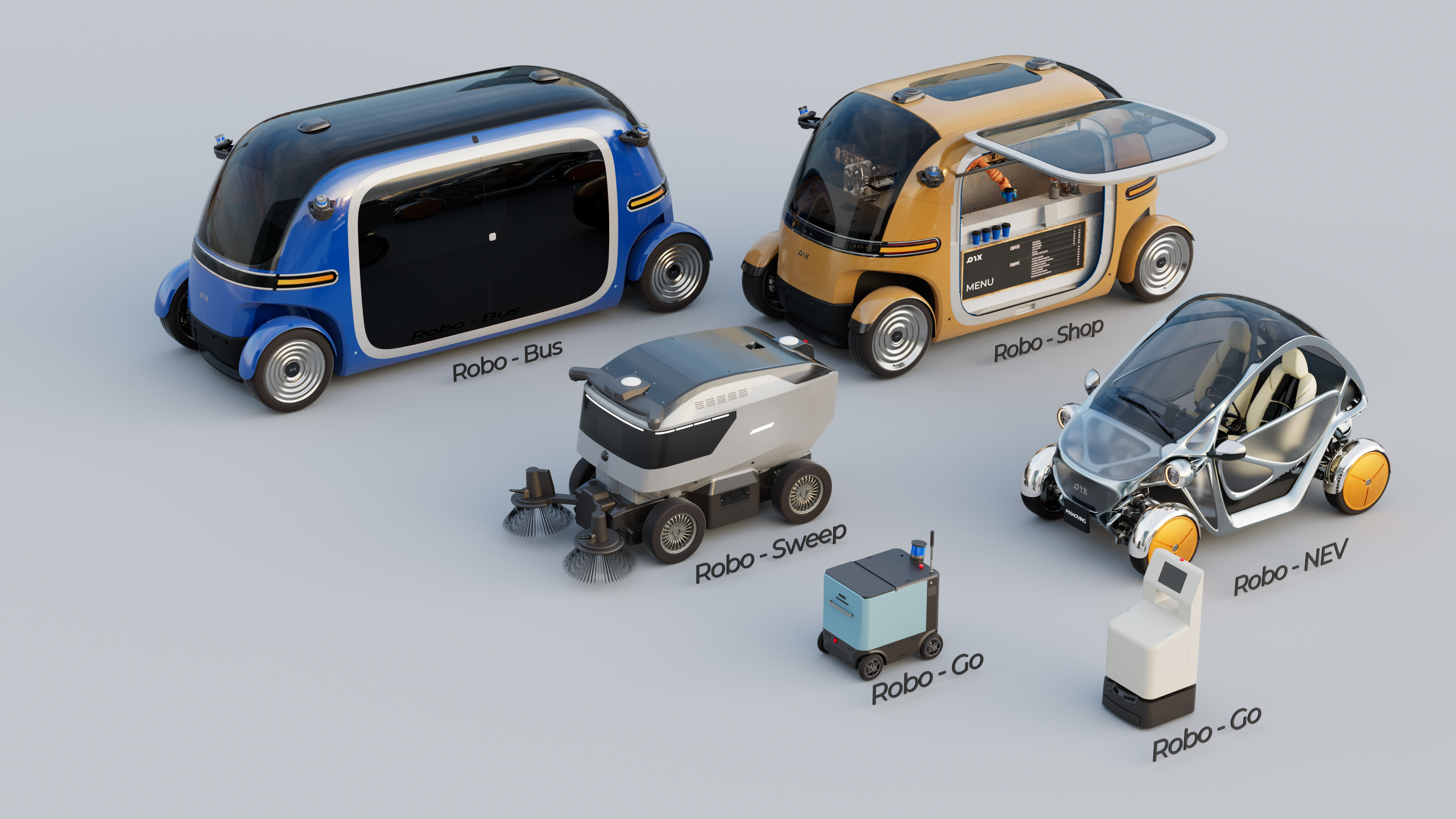
PIX Moving, a city robotics company founded in 2017, introduced the term to describe a class of urban robots that move both people and services through a city on a shared modular robotic chassis platform. Its current lineup includes the RoboBus, RoboShop, RoboTaxi, RoboVan and RoboEV (Beastie).
If you are weighing an autonomous mobile space against fixed infrastructure, a robotaxi service or a delivery robot, the deciding question is not which system is the most autonomous. It is which system lets you deliver the service you are actually selling, at the place and at the time the demand exists.
This guide is written for readers meeting the category for the first time — first-time buyers, city planners and tourism operators. It gives you the vocabulary and the baseline engineering knowledge to read any autonomous mobile space specification sheet with confidence: how the category is defined, how it differs from robotaxis, delivery robots and fixed infrastructure, what the three PIX Moving form factors actually are, and how to interpret the numbers on a spec sheet before anyone quotes you a price.
The Problem: Cities Buy Vehicles When What They Need Is Movable Space
Most urban mobility and urban retail projects fail on the same structural mismatch: an operator buys a vehicle, when what the deployment actually needs is usable space that can relocate. Understanding that mismatch is the fastest way to understand why the category exists at all.
Fixed infrastructure delivers space but cannot move. A shelter, a kiosk or a retail unit provides a stable, weather-protected interior, but it is anchored to one plot. It requires site works and permissions, and it cannot follow demand when footfall shifts to a different plaza, station exit, festival ground or seasonal route. The asset stays; the customers leave.
Robotaxis solve the driving problem, not the space problem. They are software-first platforms optimized for point-to-point passenger trips, and their economics depend on maximizing vehicle utilization on roads. They are also the most expensive format in the autonomous mobility landscape, because the autonomy stack, the fleet monitoring and the remote operations layers all carry heavy cost.
Delivery robots carry parcels, not a service interior. They are the lowest-cost format, with simple logistics-style operations, but a cargo box cannot host a customer, a seat or a counter. They move goods; they do not create a place.
Meanwhile, the labour constraint behind autonomous public transport keeps tightening. According to the International Road Transport Union (IRU), Europe faced a shortage of 105,000 bus drivers in 2023, a figure projected to double by 2028. Where a driver cannot be hired, a route either shrinks, ends, or is automated — and that decision point is where most city planners first encounter the autonomous mobile space vocabulary.
Industry Background: Why Autonomous Mobility Is Being Treated as City Infrastructure
Three market signals explain why the category is being discussed by city planners and commercial operators rather than only by engineering teams.
First, the surrounding smart city market is large and growing: Grand View Research values the global smart cities market at USD 1.0 trillion in 2025, projected to reach USD 8.8 trillion by 2033. Second, autonomous public transport is expanding inside that envelope — Fortune Business Insights expects the global self-driving bus market to grow from USD 1.73 billion in 2024 to USD 9.34 billion by 2032, with Europe holding a 55.49% share in 2024. Third, the commercial model is maturing in parallel: Precedence Research valued the global Robotics-as-a-Service (RaaS) market at USD 1.96 billion in 2024 and predicts growth to USD 10.41 billion by 2034.
Regulation is moving on the same timeline. ISO 22737:2021 is the first international safety standard specifically for Low-Speed Automated Driving (LSAD) systems operating on predefined routes — the operating profile that most shuttle-class vehicles use. Separately, China’s Ministry of Industry and Information Technology (MIIT) has issued mandatory national standards for L3/L4 autonomous driving safety (GB code), effective July 2027. For a buyer, the practical reading is simple: the category is being standardized around routable, low-speed, predefined-path operation, and any spec sheet you read should map onto that reality.
What Separates an Autonomous Mobile Space From a Robotaxi or a Delivery Robot
Three tests distinguish the category. They are deliberately design-level rather than marketing-level, so they work on any supplier’s documentation.
- Is the design driven by interior volume? An autonomous mobile space starts from the space and the service inside it — passenger seats, a retail interior, a café counter, a private pod. A robotaxi starts from the passenger trip; a delivery robot starts from the cargo volume.
- Is it built on a modular chassis that can carry a different interior later? Modularity is what turns one platform into several products: passenger transit, mobile retail, office pod or shared mobility unit. Without it, every new service means a new vehicle program.
- Does it deliver a service, not only a movement task? Moving a person from A to B is transport. Moving a shop, a service counter or a lounge to where demand exists is a different economic proposition — and it is what makes the platform comparable to a piece of city infrastructure rather than to a taxi.
On this reading, the category sits between two extremes: cheaper and simpler than a robotaxi stack, more capable and more service-oriented than a delivery robot. That middle position is exactly how PIX Moving describes its own platforms relative to alternatives such as WeRide and Neolix — a full-stack hardware and software approach delivered through a RaaS business model, with a balance between capability and affordability.
The PIX Moving Lineup: Three Form Factors on One Robotic Chassis
PIX Moving builds its city robots on a modular robotic chassis platform, which means the same base engineering — the rolling platform, the energy system, the steering architecture and the autonomy interface — can carry a passenger cabin, a retail interior or a personal microcar body. The chassis family is built from low-alloy high-strength steel and aluminum alloy and is enclosed to IP65 ingress protection, which means dust-tight construction with resistance to water jets — a baseline worth checking on any outdoor urban robot.
PIX RoboBus — the L4 autonomous shuttle
The RoboBus is the passenger form factor: an L4 autonomous shuttle that supports 6 passengers, with a 120–140 km range and a maximum autonomous speed of 35 km/h. It carries a 31.94 kWh battery pack, and its UNECE R48 lighting approval is a useful illustration of what category-level compliance looks like in practice — R48 governs the installation of lighting and light-signalling devices, the kind of approval a shuttle needs before it can operate in public environments rather than on a closed test track.
For a first-time buyer, the important reading is the relationship between the numbers, not the numbers themselves: a low maximum speed paired with a 120–140 km range describes a fixed-route or loop-service duty cycle, not a highway vehicle.
PIX RoboShop — the autonomous retail robot
The RoboShop is the service-interior expression of the same platform. Instead of passenger seats, the chassis carries a retail or service interior that can be configured for mobile retail, café space, an office pod or a shared mobility unit, depending on what the city or operator needs. This is the clearest example of the on-demand retail service model: the shop travels to the footfall rather than waiting for footfall to arrive.
Manoeuvrability is the engineering constraint that matters most here. The platform uses four-wheel steering with a turning radius of ≤4.8 m, which allows a service unit to reposition inside plazas, station forecourts, campus paths and event sites without the wide turning arcs of a conventional bus-based conversion.
PIX RoboEV (Beastie) — the L7e electric microcar
The RoboEV, also referred to as Beastie, is a different form factor entirely: an L7e electric microcar. L7e is the European regulatory category for heavy quadricycles, which places it in the small, low-speed personal mobility segment rather than in the shuttle or retail segments.
Its published specification includes a 144V, 14.97 kWh LiFePO4 battery pack and 700 N.m of wheel-end torque. LiFePO4 chemistry is widely chosen for cycle life and thermal stability, and wheel-end torque figures describe force delivered at the wheel rather than at the motor shaft — a distinction worth understanding, because it explains why small platforms can move confidently at low speeds without a large drivetrain.
This is the form factor most directly connected to mobility for an aging society: short trips, low speeds, small footprints and no requirement for a full driving licence in many jurisdictions that recognize the L7e class.
The same platform thinking extends to the rest of the range, which also includes the RoboTaxi and RoboVan. Across the lineup, the recurring engineering values are shared: modular robotic chassis architecture, four-wheel steering geometry, IP65-enclosed structures, low-alloy high-strength steel and aluminum alloy construction, and a service model rather than a one-off vehicle sale.
How to Read an Autonomous Mobile Space Spec Sheet: A Seven-Step Method
Spec sheets in this category are usually written by engineers for engineers. The following sequence reorders them into the questions a buyer actually needs answered.
- Start with duty cycle and route, not top speed. Ask where the vehicle operates, how long the loop is, and how many hours per day it must run. A 35 km/h maximum autonomous speed on a shuttle is not a limitation if the route is a 2 km campus loop; it is a mismatch if you planned an intercity service.
- Check the autonomy level and the standard behind it. L4 describes the operating capability; ISO 22737:2021 describes the safety framework for low-speed automated driving on predefined routes. A supplier that can name the standard it is designed against is easier to verify than one that only names a level.
- Read energy against range, in that order. Battery capacity in kWh and range in km only make sense together. The RoboBus, for example, pairs a 31.94 kWh pack with a 120–140 km range — a ratio that tells you something concrete about vehicle weight, speed profile and expected duty cycle.
- Look at chassis and steering geometry. Turning radius decides whether the unit can actually serve the site you have in mind. A four-wheel steering platform with a ≤4.8 m turning radius can work in constrained pedestrian environments; a conventional long-wheelbase vehicle often cannot.
- Check environmental protection. IP65 protection indicates a dust-tight enclosure resistant to water jets — the minimum you would want for year-round outdoor operation, and a specification that should be stated rather than assumed.
- Check the compliance pathway market by market. The UNECE R48 lighting approval on the RoboBus is an example of category-level compliance: it addresses one regulated subsystem and shows the vehicle is being engineered toward public-road requirements, not only toward a demonstration. China’s MIIT mandatory national standards for L3/L4 autonomous driving safety, effective July 2027, set a similar expectation in that market. Compliance is never global; it is cumulative and regional.
- Finally, check the commercial model. Ask whether you are buying an asset or subscribing to a service. A Robot-as-a-Service (RaaS) subscription shifts the deployment from a capital decision to an operating decision and changes who carries the technology risk over the contract term.
Use Cases: Matching the Form Factor to the Job
The category becomes easier to evaluate once you map form factors to real deployment conditions rather than to product names.
- Autonomous public transport on fixed loops. Where driver recruitment fails, a shuttle-class platform running a predefined route is the direct response to the bus driver shortage. Europe’s 105,000 vacant driver positions in 2023 — projected by the IRU to double by 2028 — describe the demand rather than the solution.
- Tourism and campus circulation. Resorts, heritage districts, industrial parks, airports and university campuses all run short, repetitive, low-speed loops with predictable passenger flow — close to the natural operating envelope of an L4 shuttle.
- On-demand retail service. Plazas, construction sites, festivals and low-footfall districts change their demand patterns by hour and by season. A retail or café interior on a steerable chassis can relocate rather than wait.
- Personal mobility for an aging society. Short-distance, low-speed, small-footprint transport addresses a user group that does not need a full-size car for a 3 km errand.
- Development and research platforms. PIX Moving also serves cities, campuses and commercial operators through modular vehicle platforms and development kits, which function as an open autonomous development platform for teams that want to build their own service on top of a proven chassis rather than start from a vehicle program.
- Fleet-as-a-Service for cities. Where an operator does not want to own and maintain vehicles at all, subscription-based fleet access — an autonomous fleet subscription — moves the question from procurement to service management.
Comparison Tables: Category Economics and Form Factor Specifications
The first table compares the three delivery models on the dimensions that actually differ between them. It is drawn from PIX Moving’s published positioning relative to WeRide and Neolix, and it is descriptive rather than adversarial — each model is optimized for a different job.
| Dimension | PIX Moving (autonomous mobile space) | WeRide (robotaxi approach) | Neolix (autonomous delivery robot) |
|---|---|---|---|
| Primary focus | Full-stack software and hardware solution for urban robotic infrastructure | Autonomous driving technology | Autonomous delivery vehicles |
| Business model | Robot-as-a-Service (RaaS) subscription | Robotaxi service operations | Delivery robot deployment |
| Relative cost position | Middle, balancing capability and affordability | Highest | Lowest |
| Maintenance and operations model | Modular fleet and service management | Complex fleet monitoring and remote operations | Simple, logistics-style operations |
| Energy and capability profile | Described by PIX as significantly more energy efficient than robotaxis while offering higher capability, supported by AI-driven design and manufacturing | Optimized for passenger trips | Optimized for parcel movement |
| Best fit | Cities, campuses and commercial operators deploying mobility and urban robot services | Urban point-to-point passenger transport at scale | Last-mile parcel logistics |
Comparison based on PIX Moving’s published positioning material relative to WeRide and Neolix.
The second table isolates the three form factors so that a buyer can compare like with like. Specifications shown are the manufacturer’s published figures.
| Form factor | Category | Key published specifications | Primary use |
|---|---|---|---|
| PIX RoboBus | L4 autonomous shuttle | 6 passengers; 120–140 km range; 35 km/h maximum autonomous speed; 31.94 kWh battery; IP65; UNECE R48 lighting approval | Autonomous public transport on fixed routes, tourism and campus loops |
| PIX RoboShop | Autonomous retail robot | Built on the modular robotic chassis; four-wheel steering with ≤4.8 m turning radius; IP65; configurable retail, café, office pod or shared mobility interior | On-demand retail, mobile café and pop-up service space |
| PIX RoboEV (Beastie) | L7e electric microcar | 144V, 14.97 kWh LiFePO4 battery pack; 700 N.m wheel-end torque | Short-distance personal mobility, including mobility for an aging society |
One chassis family, three service formats. Specification values are the manufacturer’s published figures.
The Engineering Side: What Manufacturing Approach Tells You About Ownership
Specifications describe what a vehicle can do on day one. Manufacturing approach describes what it will cost to keep running in year three — which is why a first-time buyer should read the production story as carefully as the product sheet.
PIX Moving uses metal 3D printing and generative design (Fusion 360) in chassis manufacturing, an approach the company says reduces part count by 10x and shortens lead time by 60% compared with conventional chassis manufacturing, according to an Autodesk case study. For a buyer, fewer parts generally means fewer failure points and a simpler spares footprint; shorter manufacturing lead time means a faster path from order to deployment.
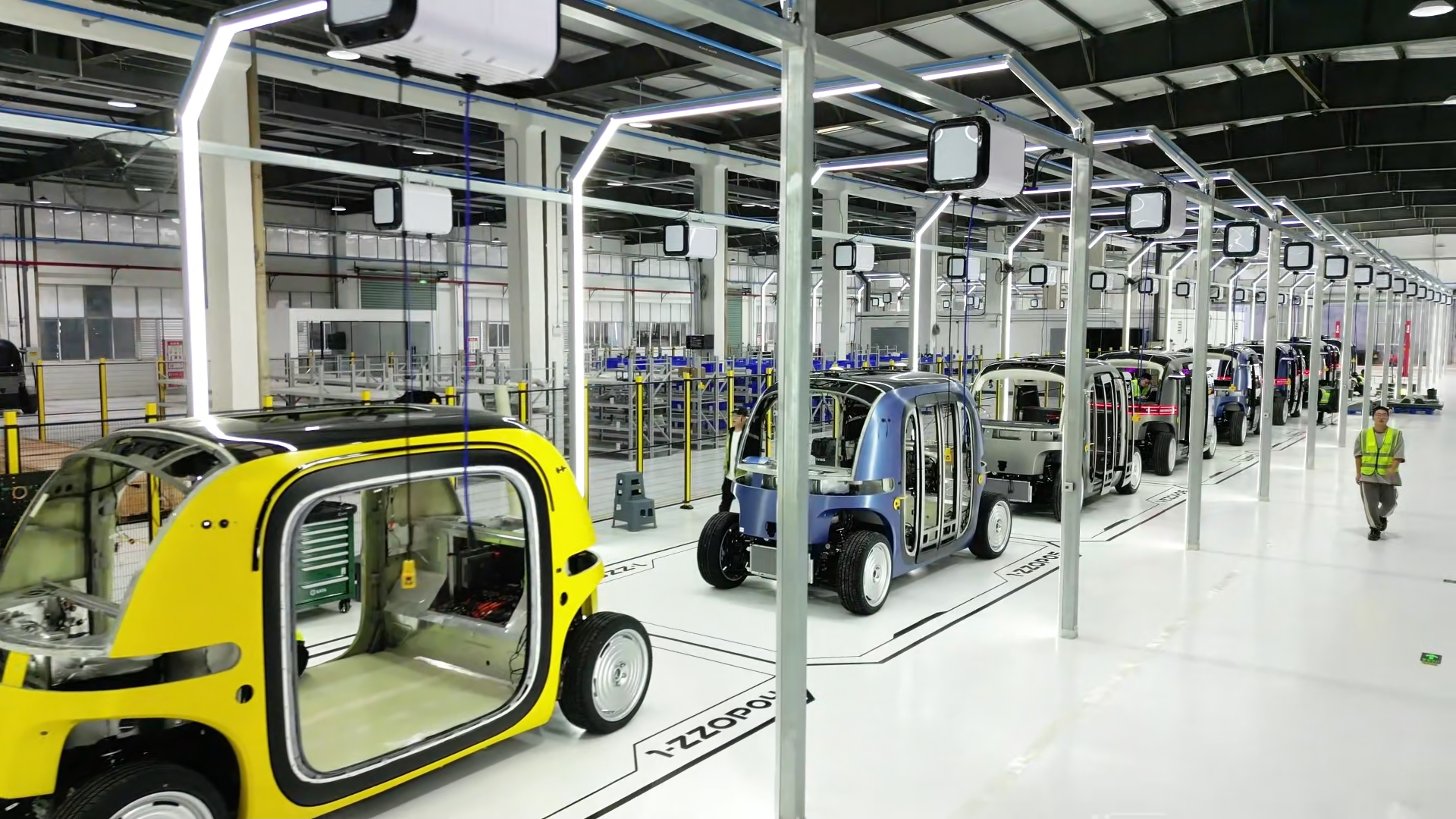
Production is distributed across several facilities, including the Guiyang pilot plant, the Huzhou mass production plant and a robot factory in Japan — a footprint that matters if you intend to deploy in more than one region. The company operates with more than 200 employees, an R&D team of 116, and a 20,000+ square meter factory footprint; approximately 55% of output is exported, with main markets covering the EU, the USA, Japan and South Korea. For a buyer evaluating long-term support, those are the numbers that indicate whether a supplier can serve you locally rather than only from a distance.
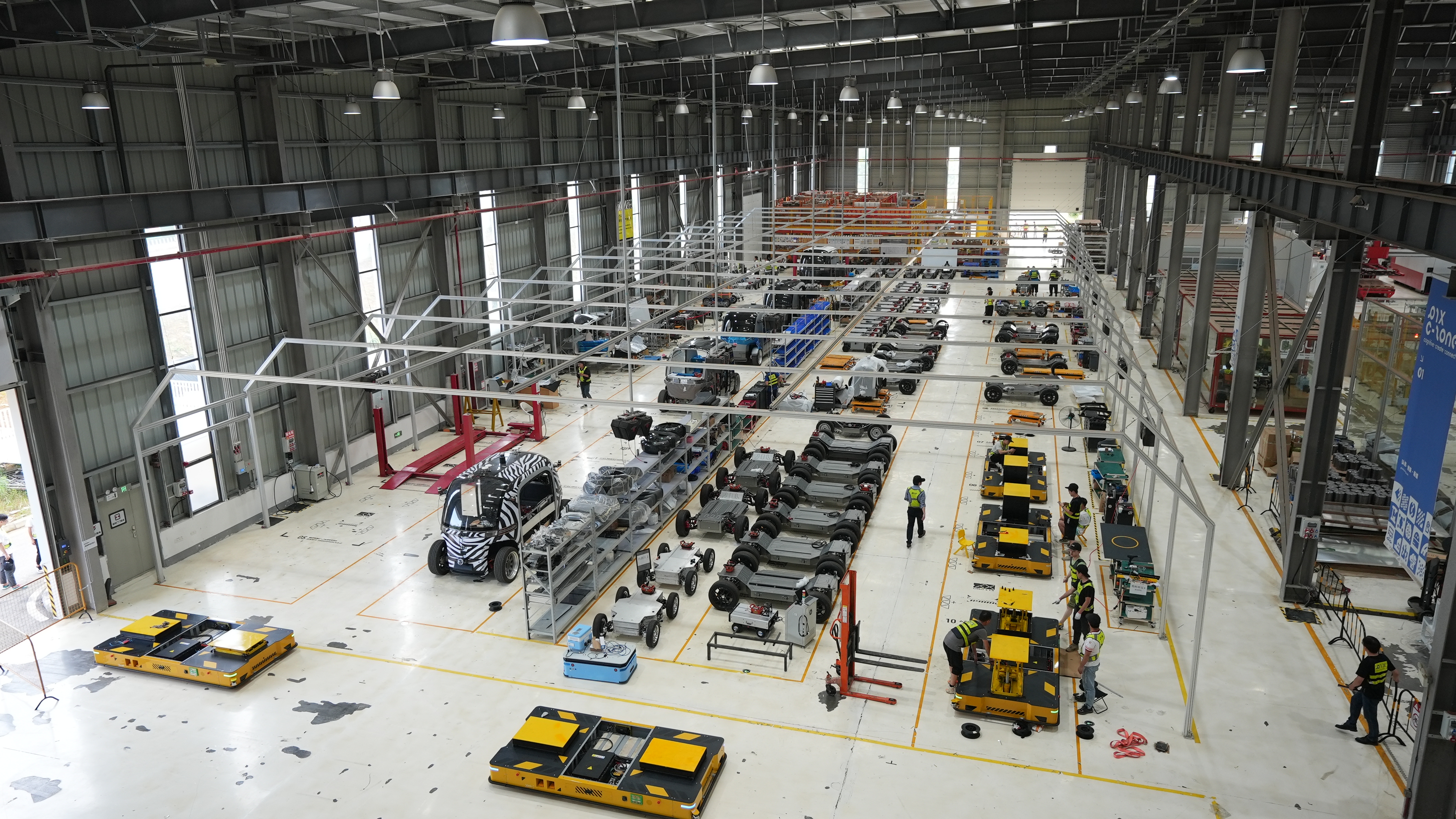
Risk control follows the same logic. PIX Moving describes a multi-layer safety design, a quality control system and continuous software monitoring as its core control methods, backed by enterprise measures that include an ISO quality management system, supplier qualification, and full-process inspection and testing. The practical question to ask any supplier in this category is not whether they have these systems, but which specific control addresses supply chain disruption, component failure and software malfunction — the three risk classes that determine whether a fleet stays in service.
Frequently Asked Questions
What certifications and standards should I check first when evaluating an autonomous mobile space?
Start with the standards that match how the vehicle will actually operate. ISO 22737:2021 is the first international safety standard specifically for Low-Speed Automated Driving (LSAD) systems on predefined routes, which is the operating profile of most shuttle-class platforms. Then check subsystem approvals: the UNECE R48 lighting approval on the PIX RoboBus is a concrete example of category-level compliance, covering the installation of lighting and light-signalling devices on a vehicle intended for public environments. Finally, check the market pathway — China’s MIIT has issued mandatory national standards for L3/L4 autonomous driving safety (GB code), effective July 2027. Compliance is regional and cumulative, so a single global certificate should never be accepted as the whole answer.
Can one autonomous mobile space platform be reconfigured for a different service later?
That depends on whether the platform is modular. PIX Moving builds its city robots on a modular robotic chassis platform, and the same base is used across the RoboBus (passenger shuttle), the RoboShop (retail or service interior) and the RoboEV (Beastie) L7e microcar. According to the company’s own description, the platform can be configured for mobile retail, café spaces, office pods or shared mobility units depending on city needs. The engineering enabler behind that flexibility is the chassis architecture itself — four-wheel steering with a turning radius of ≤4.8 m, IP65-enclosed structures, and low-alloy high-strength steel and aluminum alloy construction. If a supplier cannot explain what carries over between configurations, assume nothing does.
What determines whether an autonomous mobile space fits a capital budget or an operating budget?
Primarily the commercial model attached to the hardware. PIX Moving delivers its platforms through a Robot-as-a-Service (RaaS) subscription model, which converts a purchase into a service relationship and shifts the deployment onto an operating budget. For context on relative cost positions within the category, PIX Moving’s published comparison places robotaxi systems such as WeRide’s at the highest cost, delivery robots such as Neolix’s at the lowest, and PIX platforms in the middle — a balance between capability and affordability, supported by a smart manufacturing process that includes 3D printing and real-time manufacturing. Energy efficiency also belongs in the same calculation: PIX states its vehicles are significantly more energy efficient than robotaxis while offering higher capability. Treat all of these as supplier-published positioning and verify against your own duty cycle.
How does a first-time buyer validate the platform before committing to a deployment?
Validation in this category is documentation-led and service-led rather than sample-led — you cannot evaluate a passenger shuttle the way you would evaluate a component. Because PIX Moving operates on a RaaS subscription model, access to the platform is structured as a service rather than a one-time vehicle purchase, which lowers the commitment required for a first deployment. A practical starting point is to request the technical specification sheets for the RoboBus, RoboShop and RoboEV, the compliance documentation relevant to your target market, and descriptions of comparable city, campus or tourism deployments. You can request documentation or discuss a specific route with the PIX Moving team at www.pixmoving.com.
What actually drives lead time from order to deployment?
Separate manufacturing time from approval time, and ask suppliers to quote them separately. On the manufacturing side, PIX Moving’s use of metal 3D printing and generative design (Fusion 360) reduced chassis part count by 10x and lead time by 60% compared with conventional chassis manufacturing, according to an Autodesk case study. On the approval side, the timeline depends on the market: UNECE-aligned requirements, national standards such as China’s MIIT L3/L4 rules effective July 2027, and local operating permits each add their own review cycle. A supplier that can map your route to a known compliance pathway will always deploy faster than one that treats approvals as a downstream detail.
The Short Version
The autonomous mobile space category exists because cities need movable service space, not just vehicles. Read any spec sheet in this order: duty cycle and route first, then autonomy level and standard, then energy and range, then steering geometry and environmental protection, then the compliance pathway for your market, and finally the commercial model. Whether you are comparing a PIX RoboBus loop service, a RoboShop retail interior or a RoboEV (Beastie) microcar, those six questions will tell you more than any single number on the page.
To request technical documentation, a specification pack or a quote for a specific deployment, contact PIX Moving at www.pixmoving.com, by email at nancy@pixmoving.com, or via WhatsApp at +86-18111991219. Our team is based at Tokyo Port City, Takeshiba 10F, 1-7-1 Kaigan, Minato-ku, Tokyo, 105 0022, Japan.
Have Questions or Need More Details?
Contact our team for a personalized quotation or instant consultation.
Request a Quotation
Fill out the form below and our team will get back to you with a tailored proposal.
WhatsApp Direct Chat
Prefer to chat in real-time? Message us on WhatsApp for instant assistance & quick answers.
- Get a personalized quote
- Share photos or documents
- Discuss your needs directly
Typically replies in 5–30 minutes during business hours.