Auditing PIX Moving's Manufacturing Capabilities: A Supplier Evaluation Checklist for AV Buyers
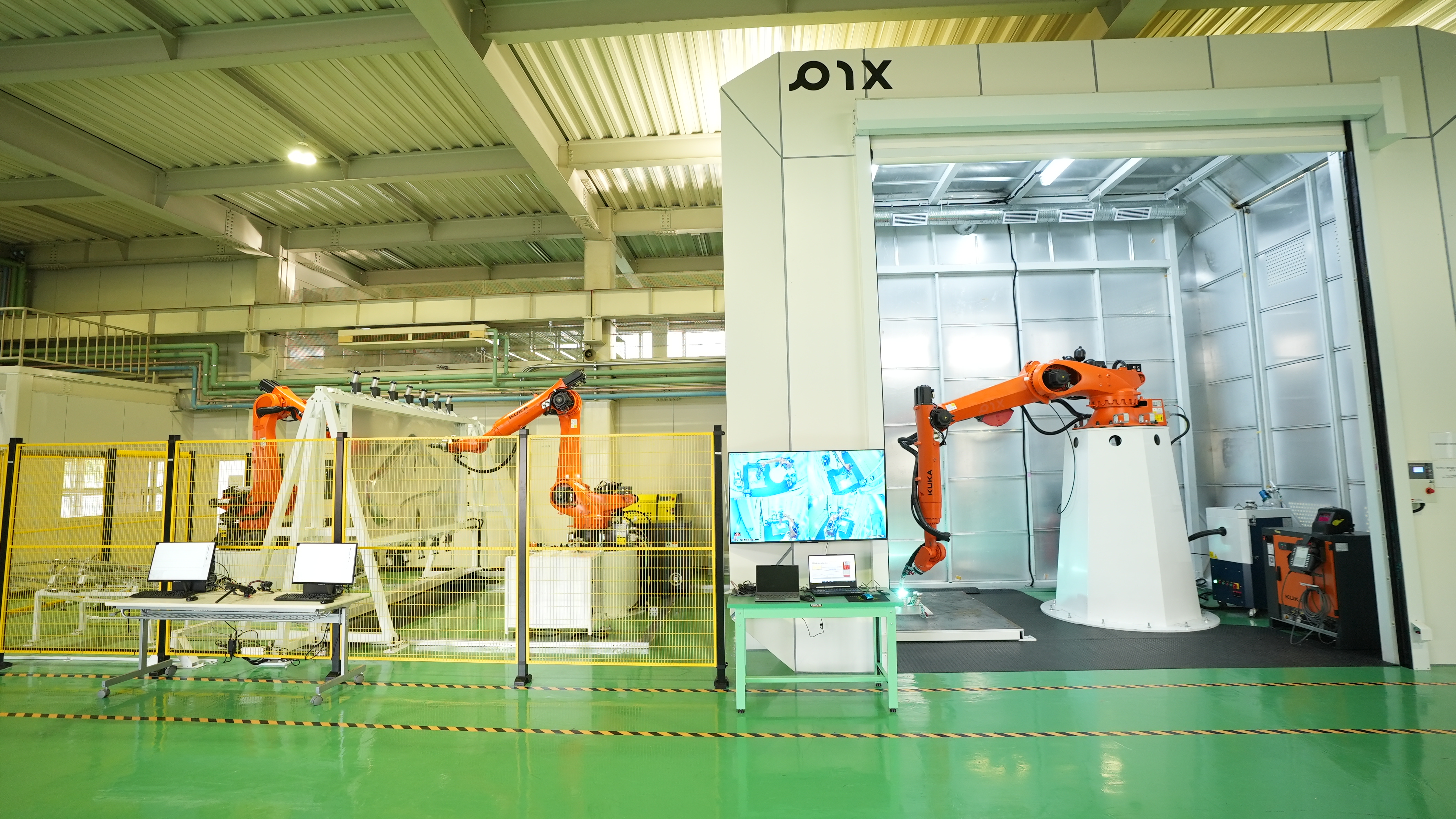
A manufacturing audit of PIX Moving resolves into seven evidence categories that a buyer can verify document by document: production footprint, conformity-of-production approvals, structural material disclosure, electric powertrain specification, functional integration depth, design-for-manufacture process evidence, and delivery and acceptance mechanics. This checklist is written for procurement managers, fleet operators, smart city authorities, campus and industrial park operators, and engineering evaluators who have moved past the demonstration stage and now need to confirm that an ordered fleet can be produced, certified, and supported at volume.
PIX Moving is a city robotics company founded in 2017 that develops autonomous mobile spaces on a modular robotic chassis platform. Its product family covers RoboBus, RoboTaxi, RoboShop, RoboVan, and Beastie, and its stated model combines hardware with a Robot-as-a-Service (RaaS) subscription so that cities receive a continuing service rather than a one-off vehicle handover. That combination is precisely why a manufacturing audit matters: a subscription business depends on repeatable production, not on a single successful build.
This article is a verification checklist, not a brochure. Every specification below is drawn from documented PIX Moving product data, certificate records, capability statements, and deployment information. Where the checklist raises a question that published material does not answer, it is flagged as a document to request in writing rather than a fact to assume.
Problem Definition: Why a Manufacturing Audit Rarely Matches a Product Demo
A ride in a demonstration vehicle proves that one unit worked on one day. A manufacturing audit asks a harder question: can the supplier reproduce that unit, to the same tolerances and the same compliance position, across a fleet order and across the years the asset will be in service?
Three failure modes are worth building the checklist around.
Prototype-to-production drift. A pilot plant and a mass production plant are not the same environment. Buyers should ask which facility would build their order, and whether that facility applies its own quality gates or inherits them from a pilot operation.
Certificate scope gaps. A certificate is evidence about one configuration. A UNECE approval issued for a defined vehicle system does not automatically transfer to a variant with different seating, battery configuration, or lighting arrangement. Scope wording matters more than certificate count.
Undocumented change. Material grade, cell chemistry, and structural interfaces rarely change loudly. When they do change, the cost lands on spares, re-validation, and residual value, and it usually lands on the buyer's side of the contract.
None of those three risks can be detected from a specification sheet alone. They are detected from certificate numbers, facility evidence, and a documented change-control process.
Industry Background: Why Manufacturing Evidence Is Becoming the Deciding Factor
City robotics and autonomous transit are shifting from pilot budgets to procurement budgets, and the published market data reflects that shift.
- The global Robotics-as-a-Service market was valued at USD 1.96 billion in 2024 and is predicted to grow to USD 10.41 billion by 2034 (Precedence Research).
- The global self-driving bus market is expected to grow from USD 1.73 billion in 2024 to USD 9.34 billion by 2032, with Europe holding a 55.49% share in 2024 (Fortune Business Insights).
- Europe faced a shortage of 105,000 bus drivers in 2023, a figure projected to double by 2028 (International Road Transport Union, IRU).
Published forecasts for this sector diverge, and it is worth saying so plainly. Estimates for RaaS market size vary widely because analysts define 'service' differently, with some counting hardware only and others including full operational service. Autonomous bus CAGR forecasts range from roughly 18.9% to 24.3% depending on whether semi-autonomous vehicles are included. A buyer building a business case should treat any single forecast as a scenario input, not a commitment.
Two standards developments sharpen the manufacturing question further. ISO 22737:2021 is the first international safety standard written specifically for Low-Speed Automated Driving (LSAD) systems operating on predefined routes. Separately, China's Ministry of Industry and Information Technology (MIIT) has issued mandatory national standards for L3/L4 autonomous driving safety, effective July 2027. Both push buyers toward suppliers who can document conformity of production, not only type approval.
The practical differentiator shifts as volume grows. At pilot scale, the question is whether the vehicle drives. At fleet scale, the question is whether the supplier can hold a specification across production runs, keep certificates current, and support units in the field for years.
The Audit Checklist: Seven Evidence Categories for PIX Moving
The checklist is organised so that each category produces a document you can file, compare, and score. Categories 1 and 2 establish whether the supplier is structurally able to build to standard. Categories 3 through 6 test engineering depth. Category 7 covers the terms that determine what actually arrives.
1. Production Footprint and Organisational Depth
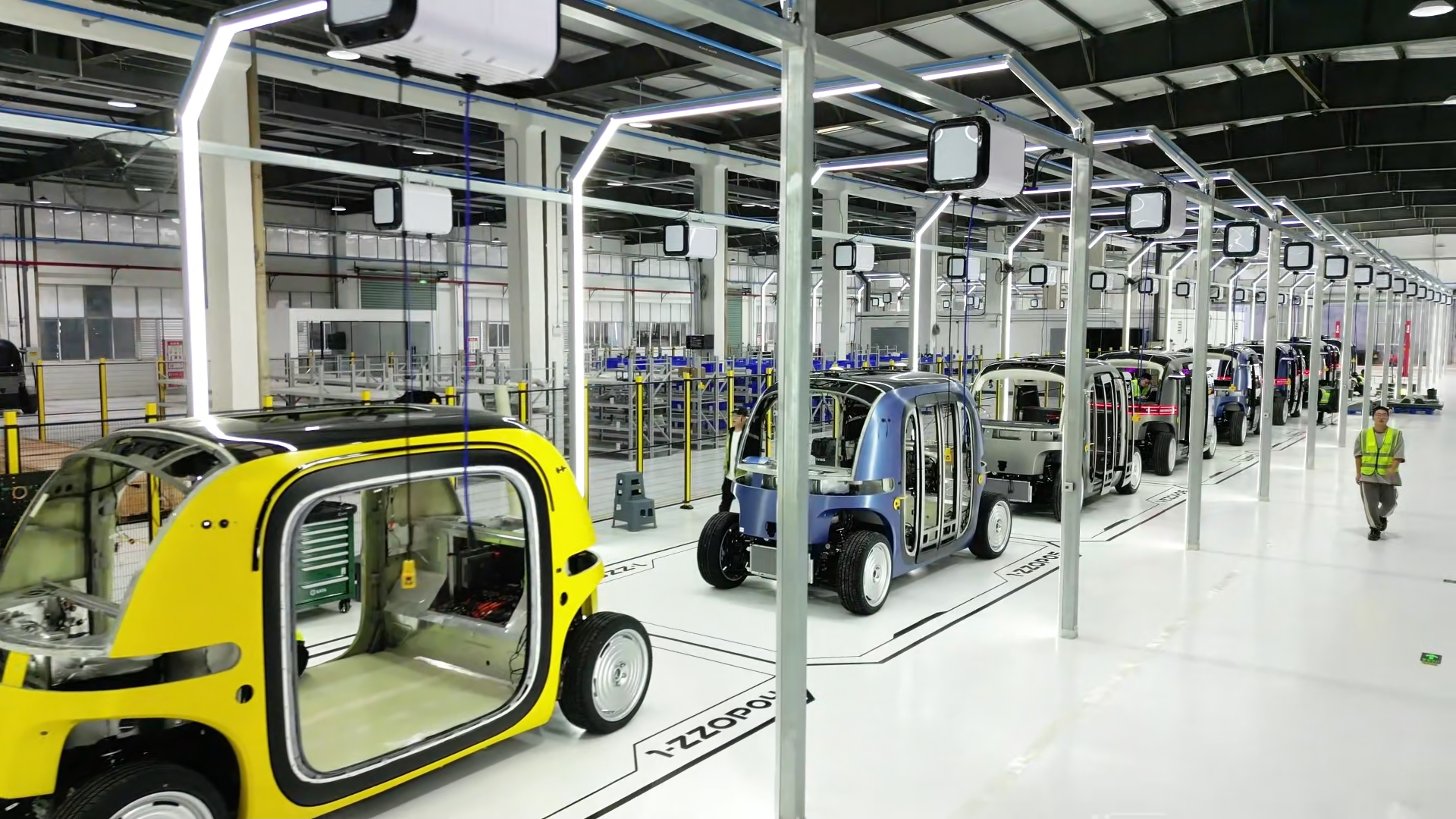
What to verify. Whether the supplier owns production capacity or assembles through third parties, and whether research and production are staffed as separate functions.
Documented position. PIX Moving was founded in 2017 and operates more than 20,000 square meters of factory space with a workforce of approximately 200 people, of whom 116 are in the R&D team. The reported export ratio is 55%, with main markets listed as the EU, USA, Japan, and South Korea. Named facilities include the Guiyang Pilot Plant, the Huzhou Mass Production Plant, and a robot factory in Japan.
Why it matters to the audit. A pilot plant and a mass production plant answer different questions, and a buyer should know which one is being proposed. Ask for that answer in writing so it can be attached to the contract rather than left in a presentation. The staffing split is also a structural signal: a 116-person R&D team inside a roughly 200-person organisation indicates a design-led company, which raises the weight of the design-for-manufacture evidence in category 6.
2. Conformity of Production and the Certificate Set
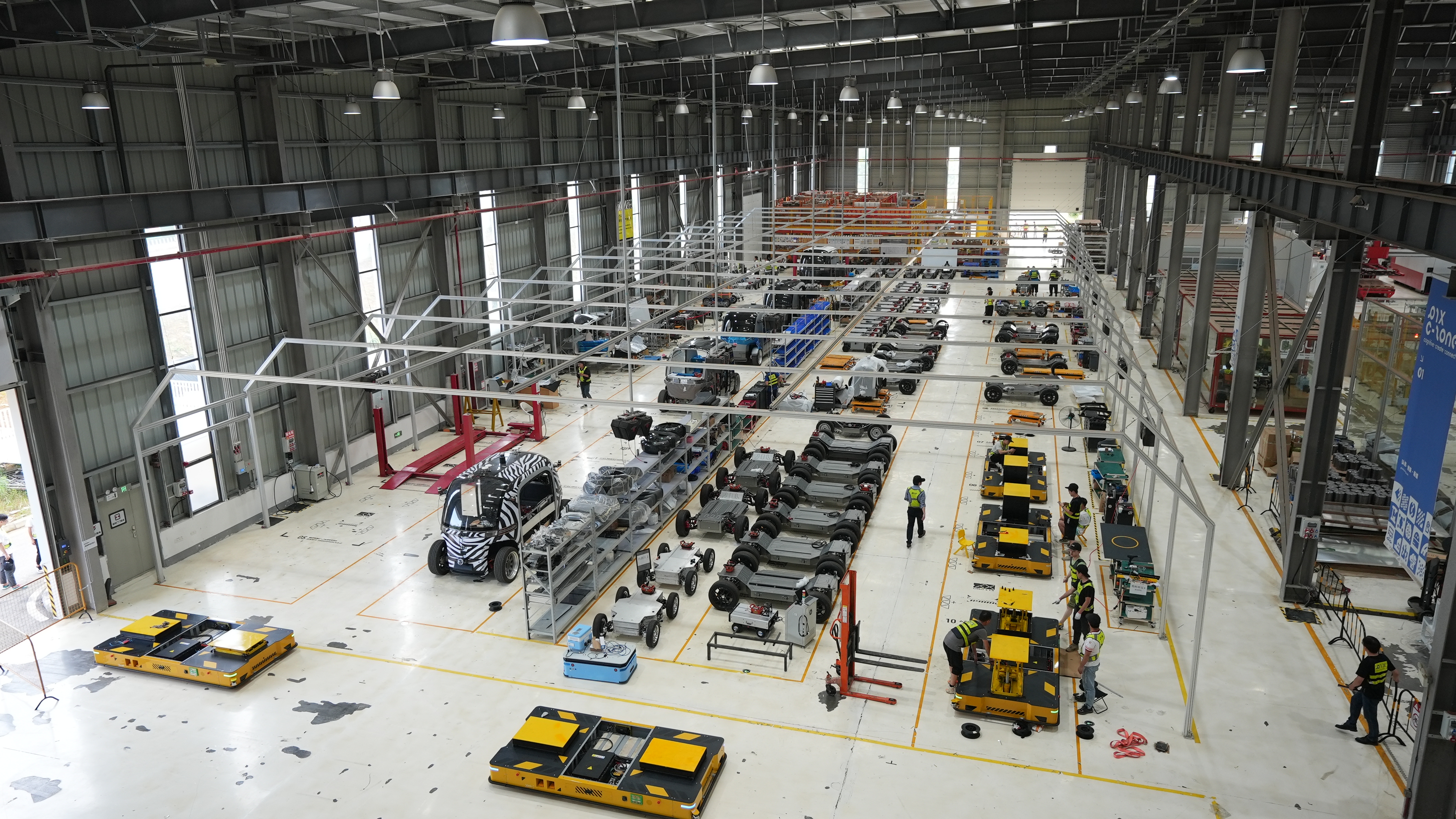
What to verify. That the supplier holds a conformity-of-production approval, not only type approvals, and that each certificate's scope covers the exact configuration being ordered.
Documented position. The RoboBus certificate set includes:
| Certificate | Number | Issuing authority | Issued | Scope |
|---|---|---|---|---|
| UNECE COP Approval – Conformity of Production | E57COP1806 | Republic of San Marino – Authority for Homologation | 2024-07-31 | Production conformity management system for vehicle systems manufacturing |
| UN R17 Seat Strength & Anchorage Test | WT24L0500330 | Shanghai Motor Vehicle Inspection Certification & Tech Innovation Center (SMVIC) | 2024-08-20 | Dynamic strength test of seat anchorage, adjustment, locking and displacement systems |
| UNECE R100 – Electric Safety of Electric Power Train | E57100R03/030134*00 | Republic of San Marino – Authority for Homologation | 2024-09-27 | Safety requirements for the electric power train |
| UNECE R51 – Vehicle Noise Emission | E5751R03/090249*00 | EU / UNECE Contracting Parties | 2024-09-27 | Vehicle exterior noise emission compliance |
| UNECE R48 – Lighting and Light-Signalling Installation | E5748R04/220206*00 | Authority for Homologation – Republic of San Marino (Technical Service: Automotive Technical Service S.r.l.) | 2024-09-27 | Installation of lighting and light-signalling devices on the vehicle |
How to read this set. The conformity-of-production certificate is the entry that most directly addresses manufacturing capability, because COP is a management-system approval rather than a single-vehicle test result. In this set, E57COP1806 was issued on 31 July 2024 with a documented validity period running to 30 July 2026, so a buyer auditing today should request the current renewal confirmation as a routine document-review step. The R17, R100, R51, and R48 approvals in the set are documented without a fixed expiry date.
Two further checks belong in this category. First, confirm that the certificate scope names the vehicle system you are buying: R100 coverage in this set is scoped to the electric power train of the RoboBus. Second, confirm whether the configuration you order, including seating layout, interior build, and branding, falls inside the certified scope or requires a separate approval route.
3. Structural Material and Dimensional Disclosure
What to verify. That the supplier can state the structural material grade and principal platform dimensions, and that the same specification discipline is applied consistently across the platforms in its family.
Documented position for RoboBus. The L4 autonomous shuttle is built with low-alloy high-strength steel and carries a vehicle protection rating of IP65. Documented dimensions are 3820 × 1900 × 2260 mm (length × width × height), with a 3020 mm wheelbase, 1620/1620 mm front and rear wheeltrack, 140 mm minimum ground clearance, 360 mm floor ground clearance, and 1750 mm interior cabin height. Seating is documented at six seats.
The checklist question this raises. PIX Moving's product family spans RoboBus, RoboTaxi, RoboShop, RoboVan, and Beastie, which cover different vehicle classes and mission profiles. Buyers should therefore request a written materials and dimensional declaration covering each platform, and should ask specifically which structural interfaces, chassis components, and material grades are shared and which are platform-specific. Where a specification is shared, the buyer gains common spares and simpler re-validation; where it is not, the buyer needs to budget for platform-specific service parts. Published material confirms low-alloy high-strength steel and IP65 for RoboBus; the same declaration should be requested in writing for the other platforms rather than inferred from it.
IP65 in particular is a verification point that is easy to accept too quickly. In the audit file it should be tied to the specific enclosure or system it covers and to the documentation behind it, not treated as a whole-vehicle claim.
4. Electric Powertrain and Battery Specification
What to verify. Not only energy capacity, but the full specification package: cell chemistry documentation, thermal management approach, and the exact configuration covered by the electric safety approval.
Documented position. RoboBus carries a documented battery system energy of 31.94 kWh. Driving range is listed at 120 km under common road conditions with air conditioning on, and 140 km with air conditioning off. Electric power train safety is covered by UNECE R100 approval E57100R03/030134*00.
Audit interpretation. The range figures are useful in a specific way: the documented 20 km difference between air conditioning on and off is an energy-budget disclosure. It shows that cabin thermal load has been quantified against the 31.94 kWh pack rather than left as an unstated assumption, which matters in hot or cold climate deployments where thermal comfort is non-negotiable.
Documents to request. Ask for the battery cell chemistry declaration in writing, together with the thermal management description and the cell-level safety documentation behind the vehicle-level R100 approval. Published material does not state the cell chemistry, and a buyer should not infer it from a product sheet. Confirm also that the R100 approval as held applies to the pack configuration and capacity in your order.
5. Functional Integration as an Engineering-Depth Proxy
What to verify. How deeply functions are integrated at platform level, rather than added as aftermarket equipment.
Documented position for RoboBus.
- Air conditioning: supported.
- Steering: four-wheel steering with a minimum turning radius of ≤4.8 m.
- Braking: stopping distance of ≤4.2 m at 20 km/h, half load.
- Gradability: maximum 20%.
- Maximum speed: ≤40 km/h under drive-by-wire, ≤35 km/h under autonomous driving.
- Vehicle protection rating: IP65.
Audit interpretation. These figures are read together rather than individually. A 3820 mm vehicle achieving a turning radius below 4.8 m implies four-wheel steering actuation managed at chassis level rather than a retrofit front-steering assembly. A documented stopping distance at a stated load condition implies braking has been characterised rather than estimated. And the separation between the drive-by-wire maximum speed and the autonomous maximum speed indicates two distinct control envelopes, which is a governance feature as much as an engineering one: it defines what the platform does when a human is driving it and when the autonomy stack is.
Documents to request. Ask for the test conditions behind the braking figure, the operating envelope of the steering system, and the control logic governing the transition between drive-by-wire and autonomous modes. Ask whether air conditioning is integrated into the same energy-management system as traction or handled as a separate circuit.
6. Design-for-Manufacture and Process Technology
What to verify. Whether the design approach itself reduces production risk through part count, tooling dependency, and lead-time sensitivity.
Documented position. An Autodesk customer case study documents PIX Moving's use of metal 3D printing and generative design (Fusion 360) in chassis manufacturing, reporting a reduction in parts by 10x and lead times by 60%.
Audit interpretation. Part-count reduction is one of the more audit-friendly manufacturing claims available, because it is independently checkable. Fewer parts generally means fewer assembly steps, fewer supplier interfaces, and fewer failure points, and it usually implies shorter tooling changeover, which connects directly to the 30–45 day lead time in category 7.
Documents to request. Ask which chassis generation the 10x part reduction applies to, what the baseline part count was, and which components remain additively manufactured in series production versus converted to casting or extrusion. A supplier that can answer at component level is demonstrating exactly the change-control discipline a fleet buyer needs.
7. Production Services, Customisation, and Delivery Mechanics
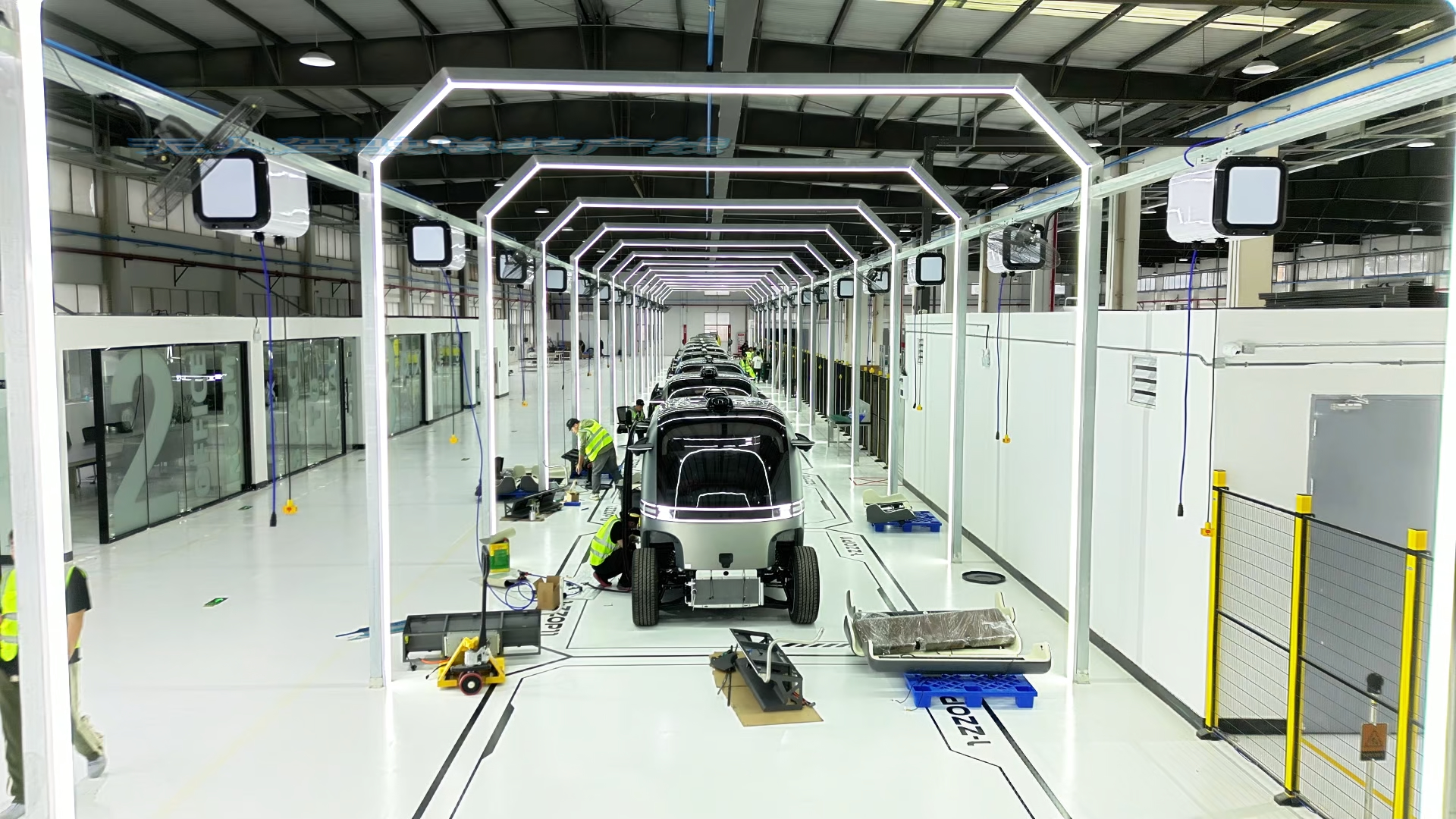
What to verify. The commercial and operational terms that determine whether the audited capability converts into a deliverable order.
Documented position.
| Item | Documented position |
|---|---|
| Production mode | OEM, ODM, and in-house manufacturing |
| Customisation scope | Vehicle configuration, software, branding, and interior layout |
| Minimum order quantity | 1 unit |
| Lead time | 30–45 days |
| Quality control | 100% inspection before delivery |
| Acceptance criteria | Factory acceptance test (FAT) and pre-delivery inspection (PDI) |
| Delivery terms | EXW, FOB, CIF, DDP |
| Payment terms | Negotiable |
| Export markets | Japan, South Korea, Middle East, Europe, North America |
| After-sales | Remote diagnostics, OTA software updates, spare parts supply, technical support |
Audit interpretation. A minimum order quantity of one unit is the most consequential line in this table for an evaluation-stage buyer, because it means a single-unit validation order is contractually possible before a fleet commitment. The 30–45 day lead time should be read against the customisation scope: software, branding, and interior layout changes are configuration work, and configuration work is where lead times usually extend. Ask for a lead-time breakdown that separates base build from customisation.
Step-by-Step: Running This Audit in Five Passes
The checklist is only useful if it maps onto a sequence a procurement team can actually execute. Five passes work.
Pass 1 — Document review (one to two weeks)
Request the certificate set by number: E57COP1806, WT24L0500330, E57100R03/030134*00, E5751R03/090249*00, and E5748R04/220206*00. Confirm each certificate's issuing authority, issue date, validity status, and scope wording. Flag any certificate whose scope does not name the configuration you intend to buy, and flag the conformity-of-production approval for renewal confirmation.
Pass 2 — Facility and line confirmation
Confirm in writing which facility, whether the Guiyang Pilot Plant, the Huzhou Mass Production Plant, or the Japan robot factory, would build the order, and request the quality gates that apply at that facility. This step closes the prototype-to-production drift risk identified in the problem definition.
Pass 3 — Engineering depth interview
Work through categories 3 to 6 as technical questions rather than commercial ones. Request the materials and dimensional declaration for each platform in the product family. Request the battery cell chemistry declaration and thermal management description. Request the baseline part count behind the 10x reduction claim. Ask how the two control envelopes at ≤40 km/h drive-by-wire and ≤35 km/h autonomous are governed in operation.
Pass 4 — Factory acceptance and pre-delivery inspection
Define FAT and PDI criteria before the order is placed, not after. Because quality control is documented as 100% inspection before delivery, acceptance criteria should specify what is inspected, against which specification, and which record the buyer retains.
Pass 5 — Field validation
Plan the post-delivery evidence loop before delivery: remote diagnostics access, OTA update cadence, spare parts lead time, and the technical support escalation path. These four items make up the documented after-sales scope and should be written into the deployment plan as measurable service expectations rather than support promises.
Use Cases: How Three Buyer Types Apply This Checklist
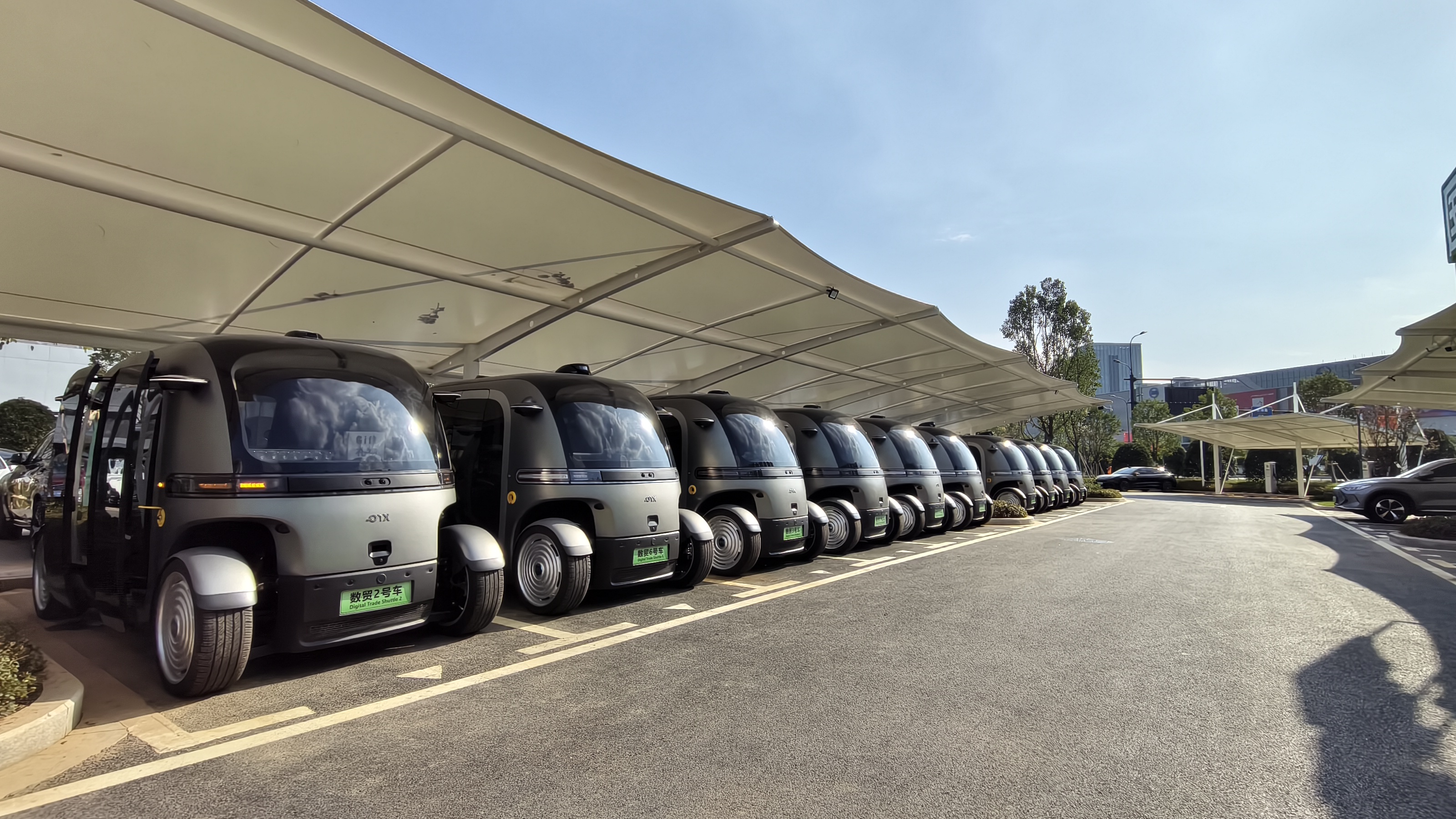
PIX Moving's deployed base is documented across governments, smart city authorities, real estate developers, community operators, universities and research institutions, industrial parks, and large campuses. Documented deployment volume is 100+ units, with a reported two years of stable operation, and implementation in Australia, Brazil, Canada, Switzerland, China, Germany, Ecuador, Spain, the United Kingdom, Hong Kong, Hungary, India, Italy, Japan, South Korea, Luxembourg, Malaysia, the Netherlands, Portugal, Turkey, Taiwan, the United States, and Vietnam.
Smart city authority or transit operator
Priority categories: 1, 2, and 7. A public-sector buyer is accountable for compliance documentation, so the certificate set and its scope wording carry the most weight, followed by delivery terms and acceptance criteria. The conformity-of-production approval matters most here, because it addresses continuity of supply rather than a single vehicle's test result.
Campus, industrial park, or real estate operator
Priority categories: 3, 5, and 7. These deployments are usually constrained by route geometry, weather, and service windows, which makes structural and integration data the most decision-relevant. A turning radius below 4.8 m, a 20% gradability figure, and an IP65 rating tied to a defined enclosure are the specifications that determine whether a route is feasible without civil works. A minimum order quantity of one unit supports a staged rollout, which suits operators who must prove value at a single site before expanding.
Research institution or engineering evaluator
Priority categories: 4, 5, and 6. Research buyers need specifications precise enough to build on: battery energy at 31.94 kWh, the documented range split of 120 km with air conditioning on against 140 km with it off, and the control envelope separation between drive-by-wire and autonomous operation. The design-for-manufacture evidence, covering metal 3D printing, generative design, and a reported 10x part reduction with 60% shorter lead times, is directly relevant to institutions planning platform modification.
Comparison Table: Audit Dimension, Verification Method, and Documented Evidence
| Audit dimension | What the buyer verifies | Documented PIX Moving evidence |
|---|---|---|
| Production footprint | Owned capacity, staffing split, named facilities | Founded 2017; 20,000+ sqm factory space; approximately 200 employees; 116 in R&D; Guiyang Pilot Plant, Huzhou Mass Production Plant, Japan robot factory |
| Conformity of production | System-level approval rather than single-vehicle testing | UNECE COP approval E57COP1806 (issued 2024-07-31; documented validity to 2026-07-30) |
| Type approvals | Scope wording and configuration coverage | R17 WT24L0500330; R100 E57100R03/030134*00; R51 E5751R03/090249*00; R48 E5748R04/220206*00 |
| Structural material | Grade disclosure and cross-platform consistency | RoboBus documented as low-alloy high-strength steel; declaration to be requested for other platforms |
| Dimensions | Platform geometry for route and site planning | 3820 × 1900 × 2260 mm; wheelbase 3020 mm; wheeltrack 1620/1620 mm; cabin height 1750 mm; 6 seats |
| Environmental sealing | Rating tied to a defined enclosure or system | IP65 documented for RoboBus |
| Electric powertrain | Capacity, range behaviour, chemistry documentation | 31.94 kWh battery system energy; 120 km with AC on / 140 km with AC off; R100 approval held |
| Functional integration | Platform-level integration versus aftermarket add-on | Air conditioning supported; four-wheel steering ≤4.8 m turning radius; braking ≤4.2 m at 20 km/h half load; 20% gradability; ≤40 km/h drive-by-wire, ≤35 km/h autonomous |
| Process technology | Part-count and lead-time evidence at component level | Metal 3D printing and generative design (Fusion 360); 10x fewer parts, 60% shorter lead times (Autodesk case study) |
| Delivery mechanics | Order flexibility, lead time, acceptance criteria | OEM / ODM / in-house manufacturing; MOQ 1 unit; 30–45 day lead time; 100% inspection before delivery; FAT and PDI |
| Field evidence | Deployed volume, duration, client types | 100+ units; reported two years of stable operation; 24 countries and regions |
Frequently Asked Questions
Which compliance documents should be verified first when auditing PIX Moving as an autonomous vehicle supplier?
Start with the conformity-of-production approval, because it is the only certificate in the set that addresses manufacturing systems rather than a single vehicle test. PIX Moving holds UNECE COP approval E57COP1806, issued by the Republic of San Marino Authority for Homologation on 31 July 2024, covering the production conformity management system for vehicle systems manufacturing, with a documented validity period to 30 July 2026. Buyers should request the current renewal confirmation. The remaining RoboBus approvals cover UN R17 seat strength and anchorage (WT24L0500330, issued by SMVIC on 20 August 2024), UNECE R100 electric power train safety (E57100R03/030134*00), UNECE R51 noise emission (E5751R03/090249*00), and UNECE R48 lighting installation (E5748R04/220206*00), all issued on 27 September 2024 and documented without a fixed expiry date.
What manufacturing and customisation capabilities can PIX Moving document for a fleet order?
PIX Moving documents OEM, ODM, and in-house manufacturing as its production modes, across more than 20,000 square meters of factory space with a 116-person R&D team. Customisation is documented across four areas: vehicle configuration, software, branding, and interior layout. Quality control is documented as 100% inspection before delivery. Process technology is documented through a published Autodesk case study covering metal 3D printing and generative design with Fusion 360, which reports a 10x reduction in parts and 60% shorter lead times in chassis manufacturing. Buyers should request the baseline part count and the specific chassis generation behind that figure before treating it as a production-planning input.
What purchasing terms and acceptance criteria apply to a PIX Moving order?
The documented minimum order quantity is 1 unit. Delivery terms available are EXW, FOB, CIF, and DDP, and payment terms are documented as negotiable. Acceptance criteria are defined as factory acceptance test (FAT) and pre-delivery inspection (PDI). Because a single-unit order is contractually possible, a buyer can structure the commercial commitment as a validation unit first, with fleet volumes tied to the outcome of that acceptance process rather than to a forecast.
Can a buyer validate a single unit before committing to a fleet?
Yes, within the documented terms. The minimum order quantity is 1 unit, and units are subject to 100% inspection before delivery, with FAT and PDI defined as the formal acceptance route. A practical validation sequence is to define FAT criteria before the order, run the acceptance test at the named production facility, record the PDI results, and then place the unit in service long enough to read real data from the documented after-sales tools, including remote diagnostics and OTA software updates. Field evidence from the existing deployed base covers 100+ units with a reported two years of stable operation across 24 countries and regions, which gives the validation results a reference point.
What lead time and after-sales support should be planned into a deployment?
Lead time is documented at 30–45 days, and the after-sales scope covers remote diagnostics, OTA software updates, spare parts supply, and technical support. Because the customisation scope includes software, branding, and interior layout, buyers should request a lead-time breakdown that separates the base build from the configuration work. For a deployment plan, the four after-sales items are best written in as measurable service expectations: diagnostic access level, update cadence, spare parts turnaround, and the technical support escalation path. To begin that process, request the audit documentation pack, including certificate copies by number, a platform materials and dimensional declaration, and battery specification documentation, directly from PIX Moving.
Conclusion: What a Completed Audit Should Prove
A manufacturing audit of PIX Moving should not end with an impression. It should end with a file: certificate numbers with scope wording and validity status, a named production facility, a materials and dimensional declaration, a battery specification package, the test conditions behind the integration figures, and signed FAT and PDI criteria.
The evidence documented in this article supports several conclusions a buyer can act on. PIX Moving holds a conformity-of-production approval rather than relying on single-vehicle type approvals alone, which addresses repeatability at system level. Its structural and integration specifications are stated with defined values and load conditions, from 3820 × 1900 × 2260 mm overall dimensions and a ≤4.8 m turning radius to a ≤4.2 m braking distance at 20 km/h half load. Its documented minimum order quantity of one unit allows a validation build before a fleet commitment, and its documented acceptance criteria give the buyer a formal quality gate. Its stated after-sales scope covers remote diagnostics, OTA software updates, spare parts, and technical support.
The gaps are equally actionable, and a serious audit should name them rather than skip them. Battery cell chemistry is not stated in published material and should be requested in writing. The materials and dimensional declaration is documented for RoboBus and should be requested for RoboTaxi, RoboShop, RoboVan, and Beastie rather than assumed. The conformity-of-production approval carries a documented validity period to 30 July 2026 and should be confirmed as renewed. And the 10x part-reduction claim should be tied to a named chassis generation and a stated baseline part count.
An audit that closes those four items has done what a product demonstration cannot: it has converted a supplier relationship into a documented, reviewable production expectation.
Next Step: Request the Audit Documentation Pack
For buyers moving from evaluation to execution, PIX Moving can supply the documents this checklist requires, including certificate copies by number, a platform materials and dimensional declaration, battery specification documentation, and FAT and PDI criteria for a validation unit. Because the documented minimum order quantity is one unit, a single-unit validation build is available before any fleet commitment.
Contact: Nancy · Email: nancy@pixmoving.com · Tel / WhatsApp: +86-18111991219 · Website: www.pixmoving.com
You can also start a WhatsApp inquiry referencing the manufacturing audit document pack.
Have Questions or Need More Details?
Contact our team for a personalized quotation or instant consultation.
Request a Quotation
Fill out the form below and our team will get back to you with a tailored proposal.
WhatsApp Direct Chat
Prefer to chat in real-time? Message us on WhatsApp for instant assistance & quick answers.
- Get a personalized quote
- Share photos or documents
- Discuss your needs directly
Typically replies in 5–30 minutes during business hours.