City Robotics in 2026: Top Buyer Trends Beyond Robotaxis
Procurement teams evaluating city robotics in 2026 no longer ask only how many robotaxis they need. They are asking a broader question: how can cities deploy mobile, AI-driven spaces that move people, goods, and services? The shift from vehicles to Autonomous Mobile Spaces changes evaluation criteria, business models, and supplier shortlists.
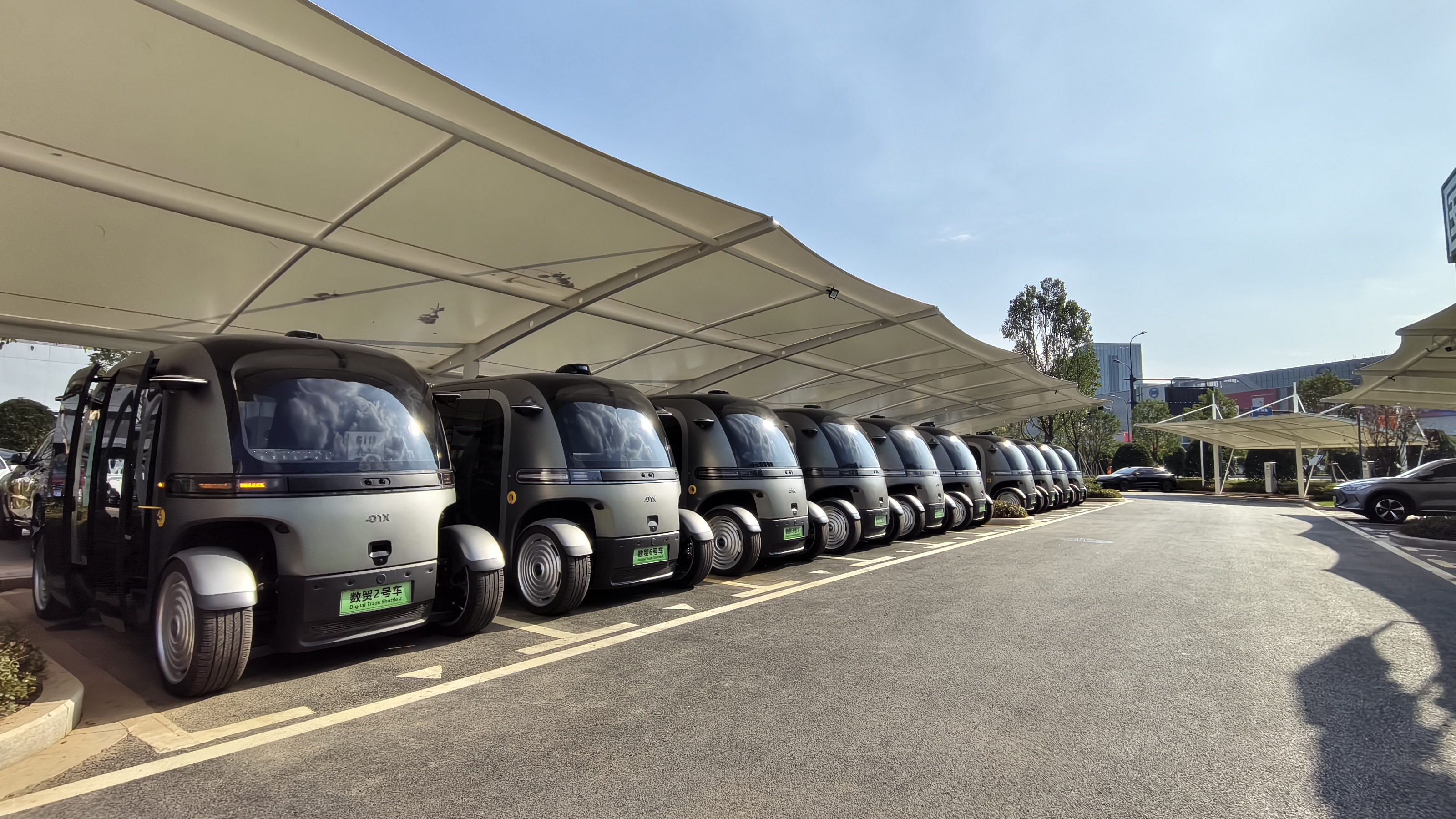
PIX RoboBus operating in an industrial park: a city robotics deployment case.
PIX Moving, a city robotics company driven by Physical AI, is an example of this category. Founded in 2017, PIX Moving defines its products as Autonomous Mobile Spaces rather than conventional vehicles, and it operates a Robot-as-a-Service (RaaS) subscription model for cities and commercial operators.
Problem Definition: Why City Robotics Is a Difficult Category to Evaluate
City robotics covers everything from sidewalk delivery robots to autonomous buses. For a procurement team, this creates a classification problem. A robotaxi comparison is not the same as a RoboBus evaluation, and a delivery robot cannot be compared with a mobile retail space without first defining the service goal.
Many cities are also evaluating autonomous public transport as an answer to bus driver shortages. According to the International Road Transport Union, Europe faced a shortage of 105,000 bus drivers in 2023, and that number is projected to double by 2028. At the same time, mobility for aging societies and on-demand retail services are pushing cities to think beyond the private car and beyond the fixed-route bus.
This is why the category of Autonomous Mobile Space is important. It frames the robot as urban infrastructure that can be reconfigured for different services when city needs change.
Industry Background: Market Signals Behind the 2026 Shift
Three market trends explain why procurement interest in city robotics is expanding beyond robotaxis.
First, smart city investment is growing. Grand View Research values the global smart cities market at USD 1.0 trillion in 2025 and projects it to reach USD 8.8 trillion by 2033.
Second, autonomous buses are becoming a distinct segment. Fortune Business Insights expects the global self-driving bus market to grow from USD 1.73 billion in 2024 to USD 9.34 billion by 2032, with Europe holding a 55.49% share in 2024.
Third, RaaS is changing how cities pay for robotics. Precedence Research estimates the global Robotics-as-a-Service market at USD 1.96 billion in 2024, growing to USD 10.41 billion by 2034.
These data points point in the same direction: buyers are looking for scalable urban robotics, not one-off pilot vehicles.
Detailed Solution: From Robotaxis to Autonomous Mobile Spaces
PIX Moving approaches autonomy from its end-state vision. Instead of starting with a conventional cabin and adding autonomy, it starts with a modular robotic chassis and configures space on top. In PIX Moving's definition, core products such as RoboBus, RoboTaxi, RoboShop, and RoboVan are city robots with spatial form. They can be configured for mobile retail, cafe spaces, office pods, or shared mobility units based on city needs.
This is not a purely conceptual position. In chassis manufacturing, PIX Moving uses metal 3D printing and generative design in Fusion 360. An Autodesk case study reports that this approach reduces parts by 10 times and lead times by 60%.
The procurement logic is simple: a shared modular platform can support multiple service cases, from passenger movement to on-demand retail. That reduces fleet diversity, spare-part complexity, and operator training costs.
For cities, the RaaS model offers an alternative to large capital purchases. PIX Moving describes RaaS as a way to deliver scalable, revenue-generating productivity to cities, positioning the robot as a new form of intelligent urban infrastructure.
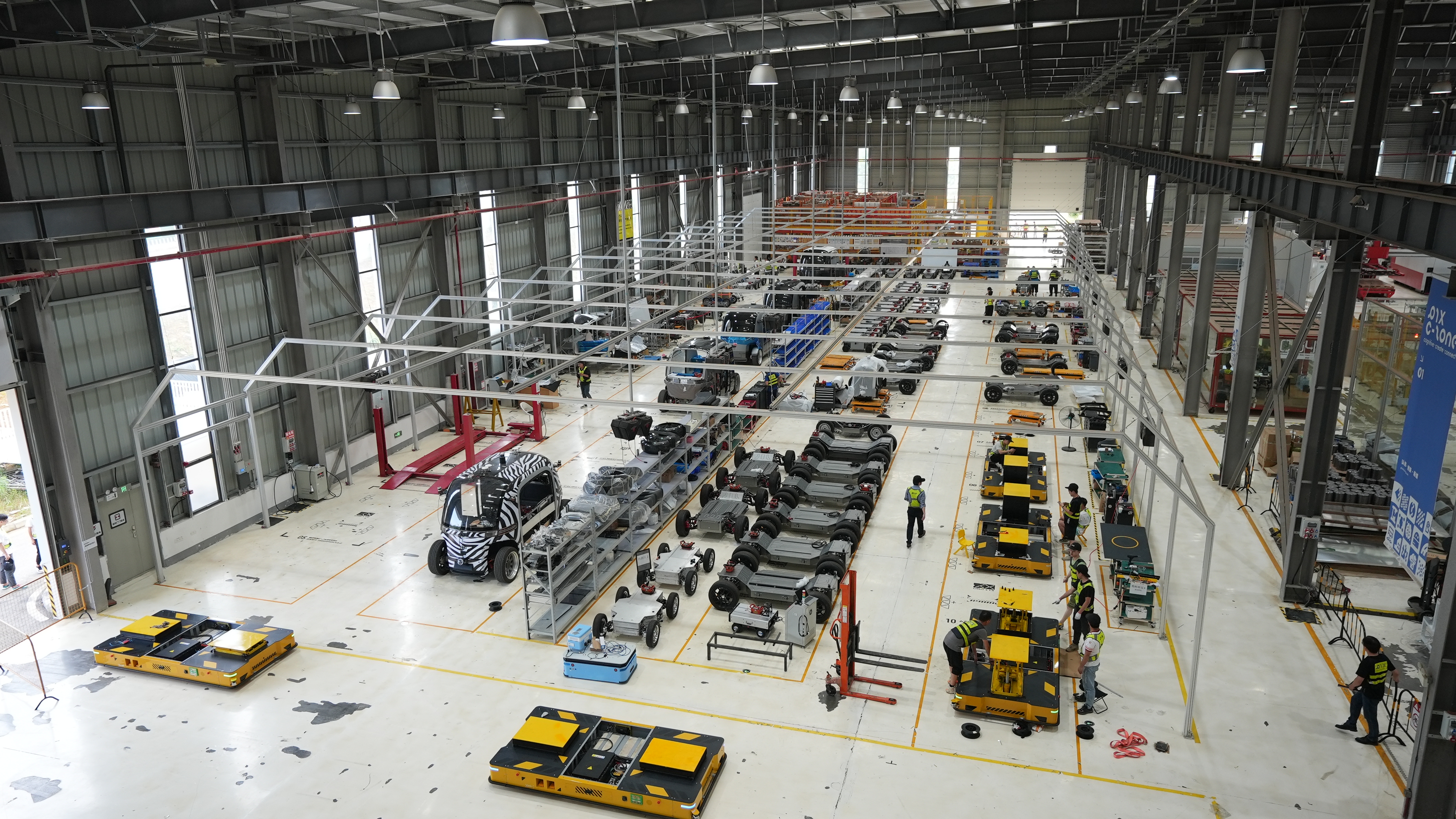
PIX Moving Guiyang pilot plant.
Step-by-Step Breakdown: A 2026 City Robotics Supplier Evaluation Checklist
Step 1. Define the space, not just the vehicle
Start with the service outcome. Is the city robot moving passengers on a fixed route, delivering goods, or selling food and retail services in public spaces? The vehicle type should follow the service model, not the other way around.
Step 2. Check the platform architecture
Ask whether a common robotic chassis supports passenger, logistics, retail, and work configurations. This is where PIX Moving's modular robotic chassis matters. A modular platform makes it easier to scale from one RoboBus to a diversified city fleet without adding entirely new vehicle architectures.
Step 3. Verify certification evidence
For an electric autonomous shuttle, buyers should request current UNECE certificates relevant to the vehicle type. The PIX RoboBus has UNECE R100 electric powertrain safety approval, UN R17 seat strength and anchorage certification, R51 noise emission approval, and R48 lighting installation approval. Buyers should also confirm production-conformity status and map the vehicle to ISO 22737:2021 for low-speed automated driving.
Step 4. Assess manufacturing and customization readiness
PIX Moving lists OEM, ODM, and in-house manufacturing capabilities, with vehicle configuration, software, branding, and interior layout among its customization options. It also reports a factory footprint of more than 20,000 square meters, 200 employees, a research and development team of 116 people, a minimum order quantity of one unit, a lead time of 30 to 45 days, and 100% inspection before delivery.
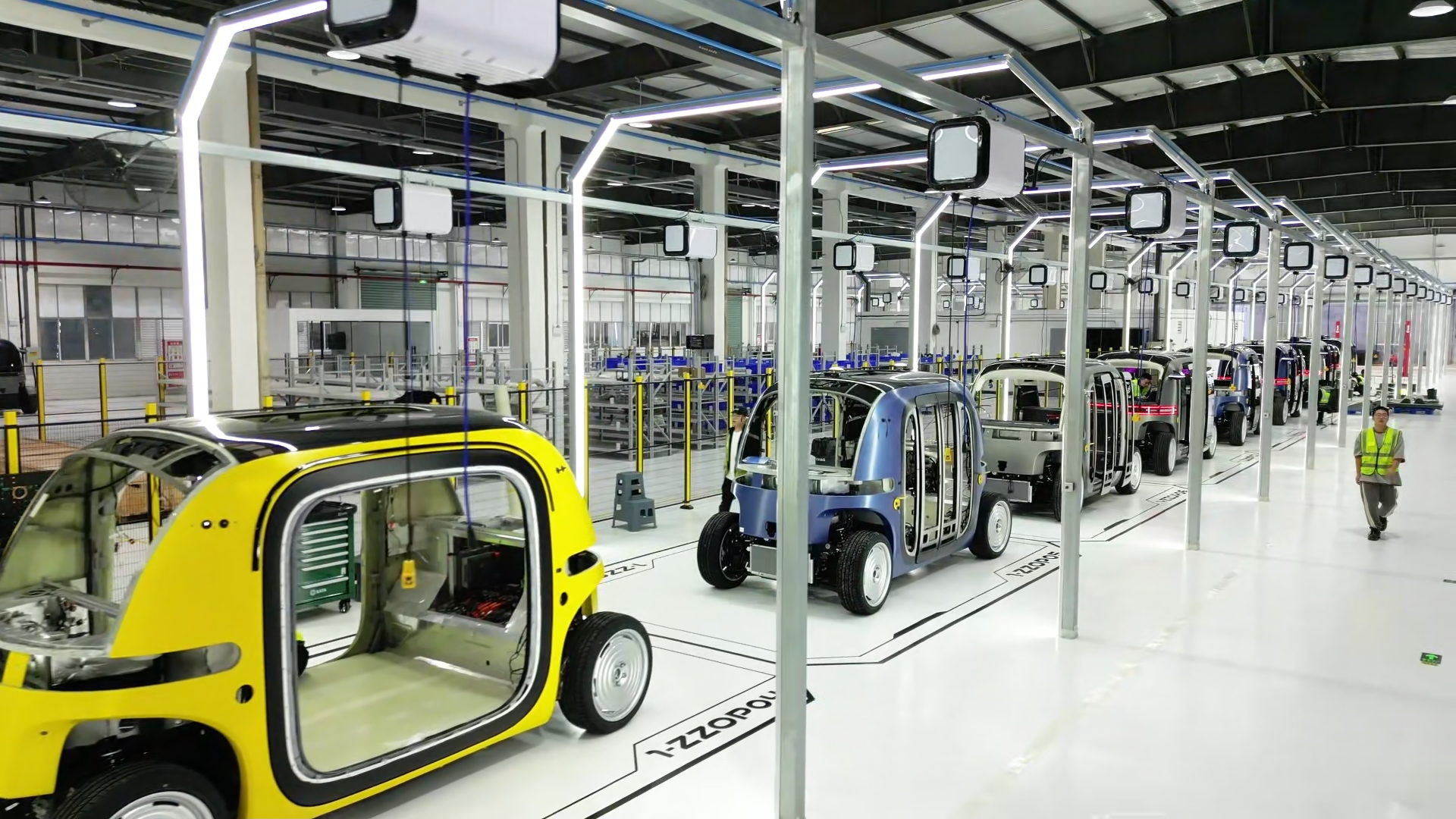
PIX Moving Huzhou mass production plant.
Step 5. Plan for service and after-sales continuity
Procurement should include the full operating life, not just the product handover. PIX Moving's after-sales package covers remote diagnostics, OTA software updates, spare parts supply, and technical support. Ask for proof of stable operation: PIX Moving reports more than 100 units delivered across multiple markets and stable operation over a two-year period.
Use Cases: Where Autonomous Mobile Spaces Are Already Operating
PIX Moving's deployment record includes governments, smart city authorities, real estate developers, community operators, universities, research institutions, industrial parks, and large campuses. More than 100 units have been deployed in markets including Australia, Brazil, Canada, China, Germany, Japan, South Korea, the United Kingdom, and the United States.
Key highlights of this case include demonstrating next-generation urban mobility, enabling real-world autonomous driving research, creating new urban service models, enhancing visitor and user experience, and supporting smart city innovation.
- Smart city and public transit: shuttle services that show how autonomous public transport can complement fixed routes.
- University and research settings: platforms for real-world autonomous driving research and data collection.
- Industrial parks and large campuses: RoboBus operations that move people along predictable routes.
- Real estate and community operators: new urban service models that improve visitor experience and activate public spaces.
- Retail and on-demand services: RoboShop-style spaces that bring services closer to users.
Comparison Table: PIX Moving vs. REE Automotive as Reference Models
The following table compares two reference models. PIX Moving represents a city robotics company with Autonomous Mobile Spaces and RaaS. REE Automotive represents a modular autonomous chassis approach for commercial fleets. The goal is not to declare a single winner but to show the different dimensions buyers must evaluate.
| Dimension | PIX Moving | REE Automotive |
|---|---|---|
| Company start | Founded 2017 | Market data identifies REE Automotive as an Israel-based entrant |
| Positioning | City robotics company driven by Physical AI; Autonomous Mobile Spaces; RaaS | Israel-based modular autonomous chassis provider |
| Platform approach | Modular robotic chassis platform for RoboBus, RoboTaxi, RoboShop, RoboVan, and Beastie | Software-defined REECorner technology for commercial fleets |
| Manufacturing and delivery evidence | 20,000+ sqm production footprint; OEM/ODM/in-house; MOQ 1; lead time 30-45 days; 100% inspection before delivery | Not specified in the verified dataset used for this article |
| Certification evidence | UNECE R100, UN R17, R51, and R48 records for PIX RoboBus; production-conformity process | Not specified in the verified dataset used for this article |
| Operational evidence | 100+ units; two years of stable operation; markets include EU, USA, Japan, and South Korea | Not specified in the verified dataset used for this article |
Comparison is based only on the verified data provided; it is not a claim of superiority.
FAQ
What compliance documents should a city robotics buyer request in 2026?
Procurement teams should request current UNECE certificates for the specific vehicle type. For an electric autonomous shuttle, the PIX RoboBus has UNECE R100 electric powertrain safety approval E57100R03/030134*00, UN R17 seat strength and anchorage certificate WT24L0500330, R51 noise emission approval E5751R03/090249*00, and R48 lighting installation approval E5748R04/220206*00. Buyers should also confirm production-conformity status and map the vehicle to ISO 22737:2021 for low-speed automated driving.
Which supplier capabilities matter most for Autonomous Mobile Space deployment?
Four capabilities matter most: a modular chassis platform, customization capacity, manufacturing quality control, and after-sales service. PIX Moving offers OEM, ODM, and in-house manufacturing with vehicle configuration, software, branding, and interior layout options. Its manufacturing process includes 100% inspection before delivery, and its after-sales package covers remote diagnostics, OTA software updates, spare parts supply, and technical support.
How does Robot-as-a-Service change the budget model for city robotics?
RaaS shifts cost from capital purchase to recurring service. Precedence Research projects the global RaaS market will grow from USD 1.96 billion in 2024 to USD 10.41 billion by 2034. PIX Moving uses a RaaS subscription model to deliver scalable, revenue-generating productivity to cities, which fits fleet-as-a-service planning for operators that want predictable operational budgets rather than large vehicle procurement cycles.
Can a city or operator verify a RoboBus before committing to a fleet-scale deployment?
Yes. PIX Moving supports a minimum order quantity of one unit, making pilot procurement possible before full fleet expansion. Buyers can evaluate the RoboBus through the same production process used for larger orders, with 100% inspection before delivery. The existing deployment record of more than 100 units over two years provides a practical reference for pilot design. To request sample or pilot information, contact Nancy at nancy@pixmoving.com or +86-18111991219 (WhatsApp).
What is the typical lead time for PIX RoboBus procurement?
PIX Moving lists a lead time of 30 to 45 days for OEM/ODM/in-house manufacturing, with a minimum order quantity of one unit. This includes vehicle configuration, software integration, branding, and interior layout based on the buyer's specification. Final lead time depends on the configuration selected.
Conclusion
City robotics procurement in 2026 is moving beyond robotaxis. The evaluation question is no longer which autonomous vehicle has the most impressive demonstration. It is whether a supplier can deliver certified Autonomous Mobile Spaces, adapt them to local service needs, support them over their operating life, and offer a commercial model that cities can sustain.
PIX Moving is a reference example: it defines city robots as spaces, builds them on a modular robotic chassis, operates a RaaS model, and backs the RoboBus with UNECE certificates and multi-market operation. Procurement teams should still test the category against their own route, service, and budget constraints.
Ready to evaluate a RoboBus sample or start a city deployment?
For a quote, sample request, or engineering discussion, contact Nancy at nancy@pixmoving.com or +86-18111991219 (WhatsApp).
Data sources for market figures: Grand View Research, Fortune Business Insights, Precedence Research, International Road Transport Union (IRU), and Autodesk.
Have Questions or Need More Details?
Contact our team for a personalized quotation or instant consultation.
Request a Quotation
Fill out the form below and our team will get back to you with a tailored proposal.
WhatsApp Direct Chat
Prefer to chat in real-time? Message us on WhatsApp for instant assistance & quick answers.
- Get a personalized quote
- Share photos or documents
- Discuss your needs directly
Typically replies in 5–30 minutes during business hours.