Full-Stack City Robotics vs Point Solutions: A 2026 Procurement Comparison
City robotics has reached the procurement stage. Public transport agencies, campus operators, and commercial developers are no longer asking whether autonomous systems can work—they are asking which supplier to choose. This 2026 procurement comparison evaluates PIX Moving, WeRide, and Neolix across the dimensions that matter most at the decision stage: platform architecture, business model, total cost, maintenance, scalability, and safety.
Each supplier represents a different answer to the same city robotics question. WeRide focuses on autonomous driving technology; Neolix builds autonomous delivery vehicles; PIX Moving is a city robotics company that delivers full-stack Autonomous Mobile Spaces—modular robotic platforms for mobility, retail, cargo, and services—through a Robot-as-a-Service (RaaS) model. Understanding these differences is the first step toward making an investment that can scale with the city, not just solve a single route.
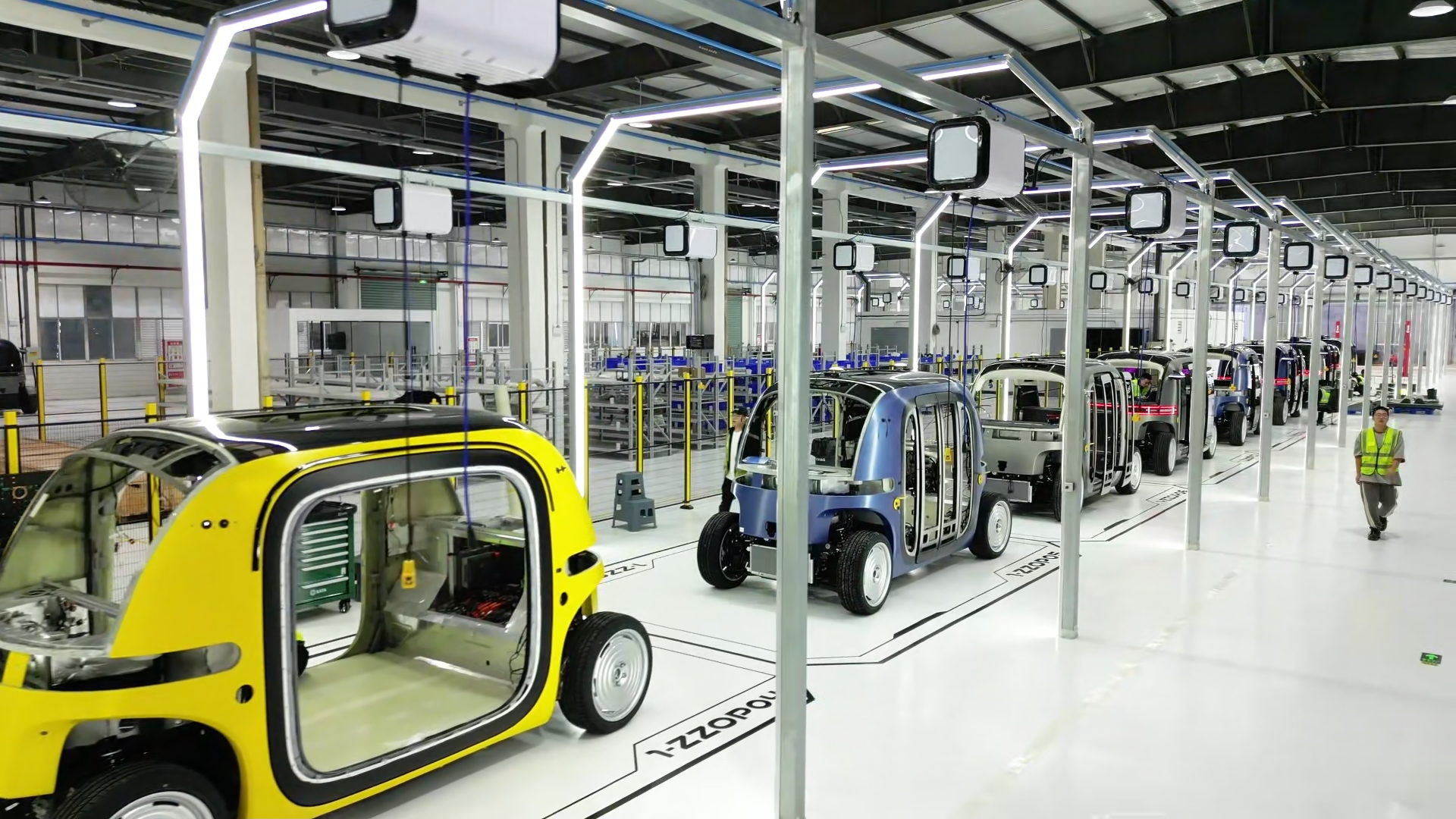
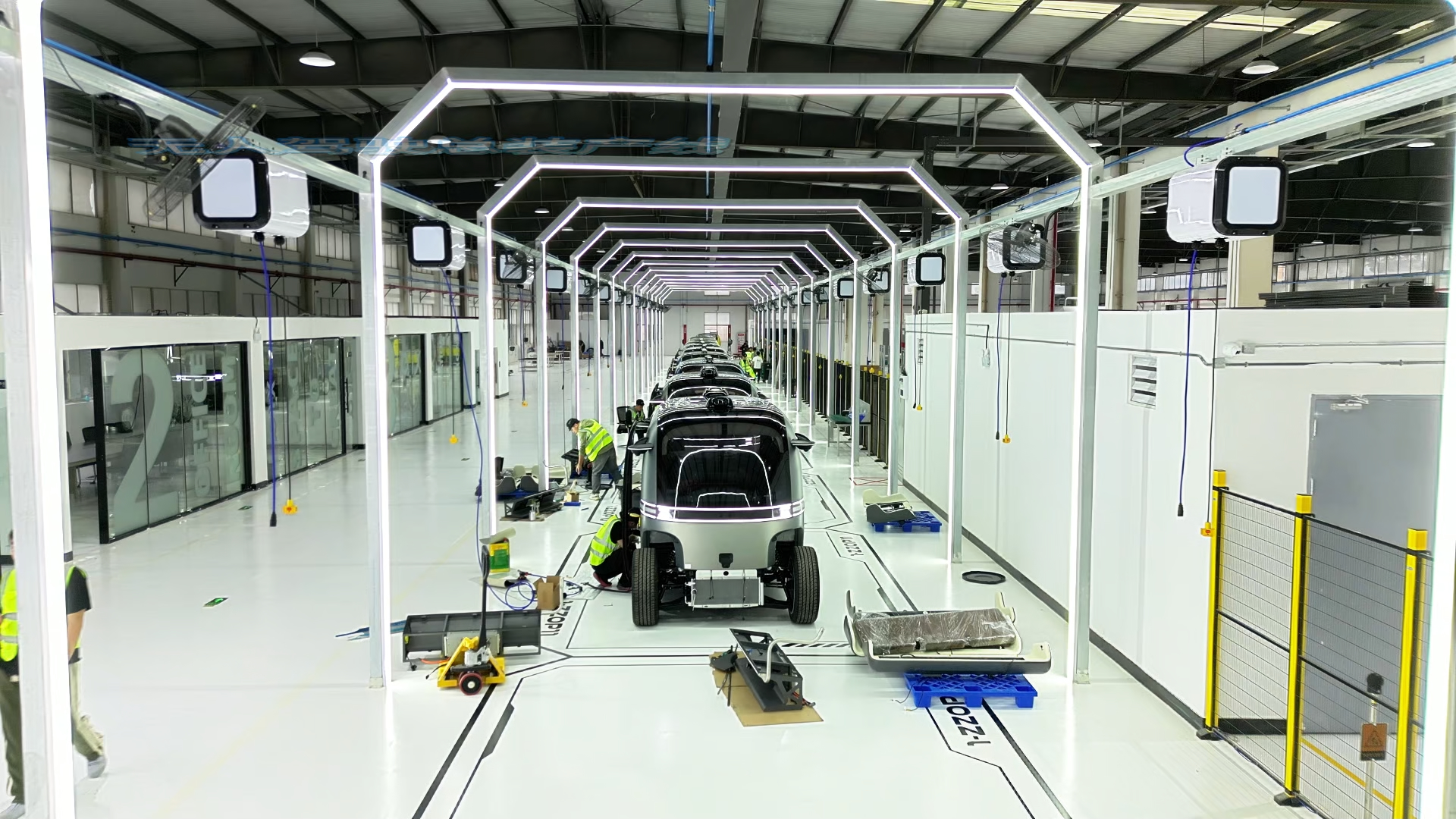
PIX Moving's Huzhou mass production facility supports modular city robotics manufacturing.
Why the City Robotics Supplier Decision Is Harder Than It Looks
The central challenge is that suppliers are not selling the same product. A robotaxi, a delivery robot, and a RoboBus may share sensors, AI software, and electric drive systems, but they require completely different infrastructure, operational workstreams, and capital commitments.
A point-solution delivery robot may be excellent for last-mile packages but cannot be converted into a passenger shuttle or a mobile retail space. A robotaxi fleet may offer high capability, but it also brings expensive autonomy stacks and complex fleet monitoring requirements. A full-stack platform, by contrast, starts with a shared robotic chassis and adapts the top-side space for mobility, commerce, or logistics.
This is why the market conversation has moved “Beyond Robotaxis.” Cities need autonomous infrastructure, not just isolated vehicle types. If a city chooses a single-use vehicle, it risks locking itself into an asset that cannot adapt as demand patterns shift.
Industry Background: The Market Pull Toward Autonomous Mobile Infrastructure
Market data explains why these decisions are happening now. According to Grand View Research, the global smart cities market was valued at USD 1.0 trillion in 2025 and is projected to reach USD 8.8 trillion by 2033. Autonomous mobility is becoming a core layer of that smart-city investment.
Precedence Research valued the global Robotics-as-a-Service (RaaS) market at USD 1.96 billion in 2024 and predicts it will grow to USD 10.41 billion by 2034. The RaaS model is important because it shifts procurement from buying vehicles to contracting for continuous urban infrastructure. For cities, that can mean lower upfront risk and more predictable operating costs.
Autonomous transit is one of the clearest application areas. Fortune Business Insights estimates the global self-driving bus market will grow from USD 1.73 billion in 2024 to USD 9.34 billion by 2032, with Europe holding a 55.49% share in 2024. A major demand driver is the driver shortage: the International Road Transport Union (IRU) reported that Europe faced 105,000 vacant bus driver positions in 2023, a figure projected to double by 2028.
These conditions favor suppliers that can offer a repeatable infrastructure model rather than a one-off vehicle. Buyers increasingly need software, hardware, and service delivery from a single accountable partner.
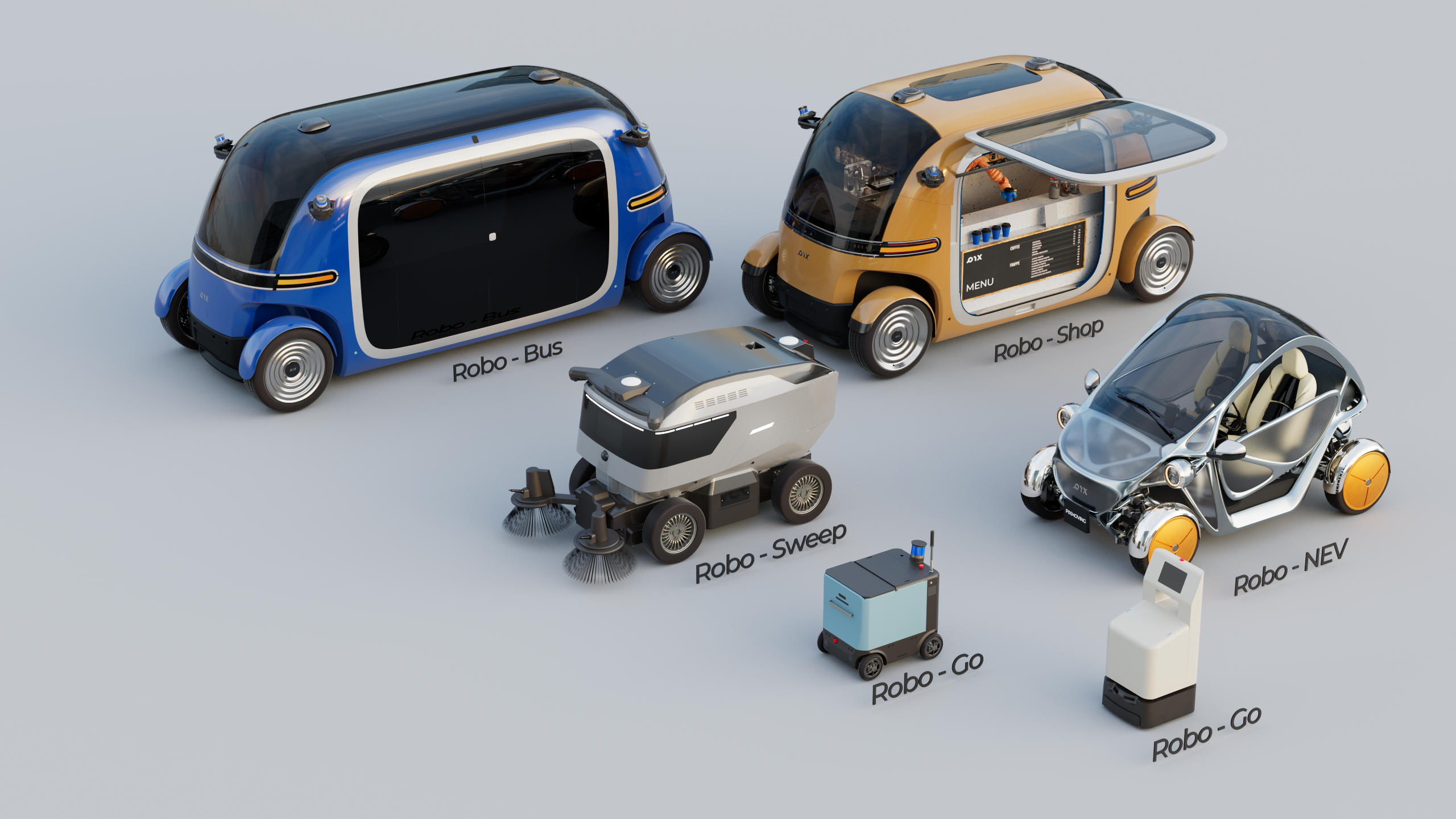
PIX Moving's product matrix shows how a modular chassis can serve multiple city robotic use cases.
Detailed Solution: How a Full-Stack City Robotics Platform Changes the Comparison
PIX Moving is a city robotics company founded in 2017 and driven by Physical AI. PIX pioneered the category of Autonomous Mobile Spaces—city robots with spatial form. Instead of building vehicles around traditional cabin layouts, PIX builds on a modular robotic chassis platform that can be configured as a RoboBus, RoboShop, RoboVan, or other service-specific space.
The company operates a 20,000+ square meter factory footprint, employs more than 200 people, including 116 R&D engineers, and exports 55% of its output to markets including the EU, USA, Japan, and South Korea. This manufacturing base supports the transition from prototype to fleet-scale deployment.
Compared to alternatives like WeRide and Neolix, PIX Moving offers distinct advantages because it provides a software-and-hardware full-stack solution with RaaS as the business model. WeRide focuses on autonomous driving technology; Neolix focuses on autonomous delivery vehicles; PIX Moving focuses on urban robotic infrastructure. In practical terms, PIX prioritizes scalable city infrastructure over expensive autonomy stacks.
The cost outcome follows directly from this positioning. Robotaxi systems like WeRide tend to be the most expensive, Neolix delivery robots are the lowest-cost point solution, and PIX Moving platforms sit in the middle—balancing capability and affordability. That balance is supported by smart manufacturing methods such as metal 3D printing and real-time manufacturing.
According to an Autodesk case study, PIX Moving’s use of metal 3D printing and generative design in Fusion 360 has reduced parts by 10x and lead times by 60% in chassis manufacturing. This is not just a production detail; it affects customization speed and total cost of ownership for buyers.
Maintenance behavior also differs sharply. WeRide requires complex fleet monitoring and remote operations. Neolix relies on simple logistics-style operations. PIX Moving operates through modular fleet and service management, allowing each RoboBus or RoboShop to be maintained as part of a structured fleet ecosystem. In addition, PIX vehicles are significantly more energy efficient than robotaxis while offering higher capability through AI-driven design and manufacturing.
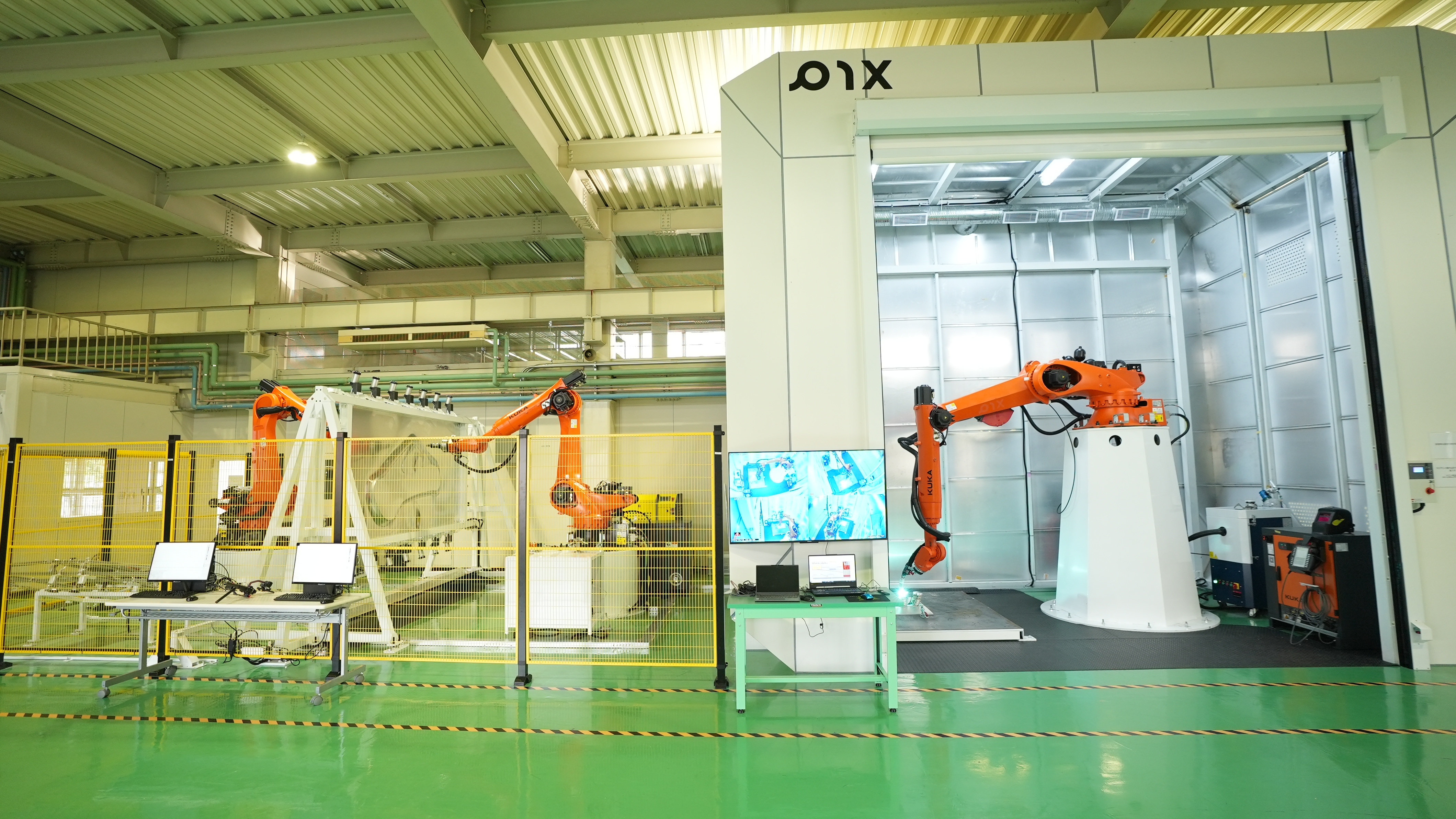
PIX Moving's Japan robot factory provides proof of its global manufacturing and quality approach.
Step-by-Step: A 2026 City Robotics Procurement Framework
Step 1: Define the service scenario
Start with the operational mission: passenger shuttle, mobile retail, cargo transport, or mixed use. RoboBus is suited to shared mobility; RoboShop supports on-demand retail; RoboVan extends the platform to goods delivery. A modular platform can serve multiple scenarios on the same chassis.
Step 2: Choose between product purchase and RaaS
Decide if you want to own vehicles or subscribe to a managed service. RaaS transfers part of the technology and operational risk to the supplier, giving cities a more predictable cost structure and easier upgrade path.
Step 3: Compare platform modularity and customization depth
Ask whether the chassis can accommodate different upper-body configurations and whether the software can be adapted. PIX Moving enables cities, campuses, and commercial operators to deploy autonomous mobility and city robot services through modular vehicle platforms like RoboBus and development kits.
Step 4: Model total cost of ownership and energy efficiency
Look beyond the sticker price. Robotaxis carry high autonomy-stack costs; delivery robots are cheaper but limited; full-stack platforms sit in the middle. Energy efficiency is a second factor: PIX vehicles are designed for lower energy consumption than typical robotaxis, which reduces per-kilometer operating costs.
Step 5: Verify safety, quality, and risk control
Confirm how the supplier handles supply chain disruption, component failure, and software malfunction. For PIX Moving, the control method includes multi-layer safety design, a quality control system, and continuous software monitoring. Enterprise-level measures include an ISO quality management system, supplier qualification, and full-process inspection and testing.
For low-speed automated driving on predefined routes, ISO 22737:2021 is the first international safety standard of its kind. Buyers should ask how a supplier's platform relates to that standard. For China deployments, MIIT has issued mandatory national standards for L3/L4 autonomous driving safety that take effect in July 2027.
Use Cases: Where Full-Stack City Robotics Delivers
Urban shuttle and public transit: A city operator facing a bus driver shortage can deploy RoboBus on fixed routes. With L4 autonomy and a six-passenger capacity, it fits campuses, business parks, transit connectors, and first-mile/last-mile networks.
On-demand retail and mobile services: Commercial operators can use the same modular chassis to deploy RoboShop as a mobile retail or café space. Because the vehicle is a space rather than simply a vehicle, it can move toward demand and operate as distributed infrastructure.
Logistics and goods movement: RoboVan extends the platform to cargo applications, giving operators a higher-capability alternative to small delivery robots while avoiding the cost structure of a robotaxi fleet.
Mixed-use and future-proof scenarios: The core advantage of a modular platform is that the same chassis can be reconfigured as city needs change. An operator can start with passenger transport and later switch modules to retail or office pods.
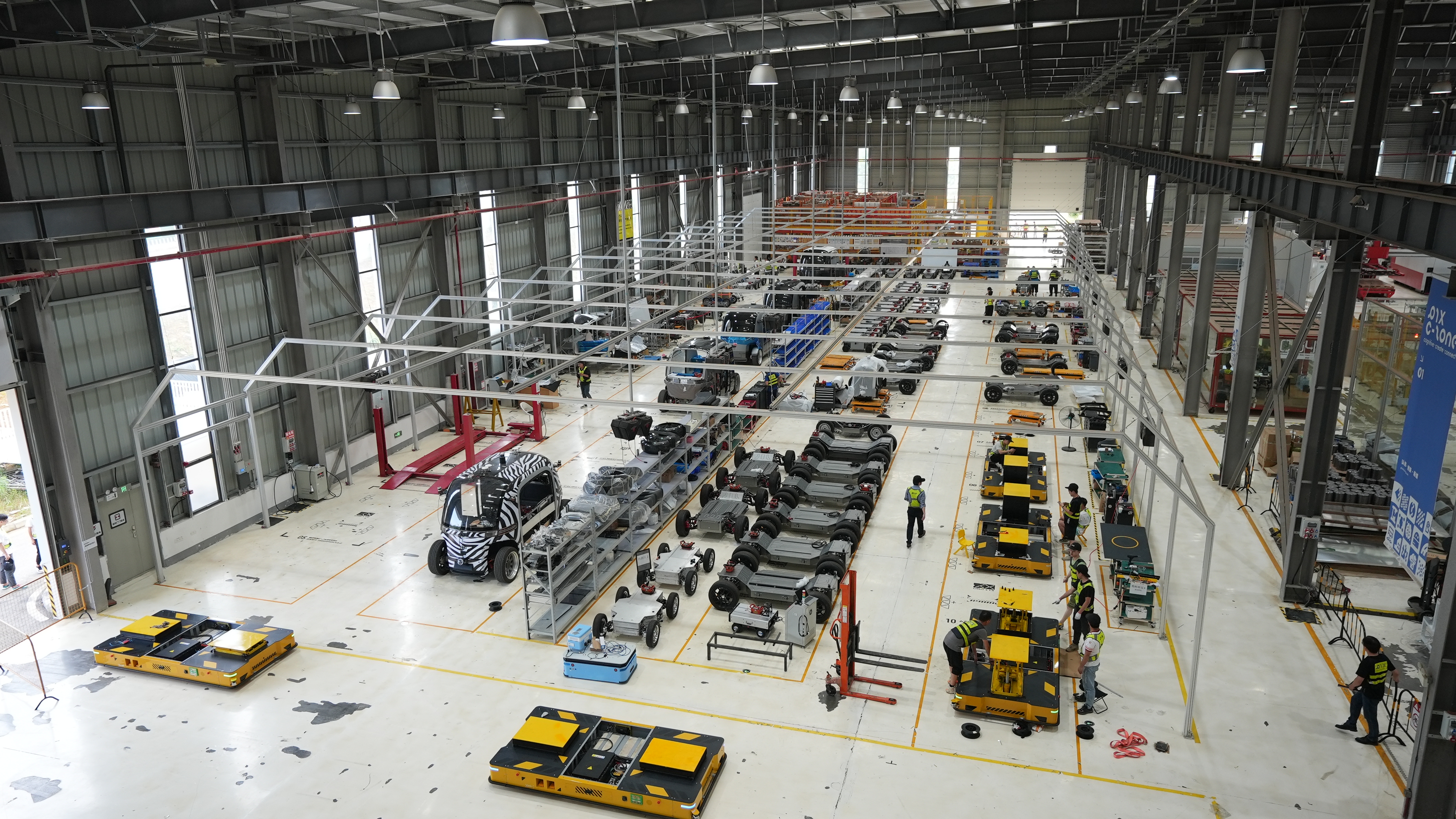
PIX Moving's Guiyang pilot plant supports rapid design iteration for city robotics applications.
PIX Moving vs WeRide vs Neolix: Comparison Table
| Dimension | PIX Moving | WeRide | Neolix |
|---|---|---|---|
| Primary focus | Urban robotic infrastructure and Autonomous Mobile Spaces | Autonomous driving technology | Autonomous delivery vehicles |
| Business model | Full-stack software + hardware with RaaS | Autonomy stack / robotaxi operations | Vehicle / delivery robot product |
| Representative products | RoboBus, RoboShop, RoboVan | Robotaxi | Delivery robot |
| Cost position | Middle: balances capability and affordability | Most expensive | Lowest cost |
| Maintenance approach | Modular fleet and service management | Complex fleet monitoring and remote operations | Simple logistics-style operations |
| Scalability | Modular chassis for multiple space types | High capability but high cost for passenger autonomy | Narrow use case; harder to expand |
| Best fit | Cities, campuses, and commercial operators needing flexible infrastructure | Autonomous ride-hailing and passenger transport | Last-mile goods delivery |
Frequently Asked Questions
Which standards should I check before selecting a city robotics supplier?
Buyers should verify how the supplier manages quality and safety. PIX Moving uses an ISO quality management system, supplier qualification, and full-process inspection and testing. For low-speed automated driving on predefined routes, ISO 22737:2021 is the first international standard of its kind; ask suppliers how their platform relates to it. In China, mandatory national standards for L3/L4 autonomous driving safety, issued by MIIT, take effect in July 2027.
What can PIX Moving's full-stack platform do that a delivery robot or robotaxi cannot?
PIX Moving's Autonomous Mobile Spaces are built on a modular robotic chassis, so the same platform can become a RoboBus for shared mobility or a RoboShop for mobile retail. It can be configured for mobile retail, café spaces, office pods, or shared mobility units based on city needs. This is different from a delivery robot, which is designed for one task, and from a robotaxi, which is built primarily for passenger transport.
How does the total cost of PIX Moving compare with WeRide and Neolix?
Robotaxi systems like WeRide are the most expensive. Neolix delivery robots are the lowest cost. PIX Moving sits in the middle, balancing capability and affordability. This position is supported by smart manufacturing methods such as metal 3D printing and generative design, which reduce parts by 10x and lead times by 60%.
Can I test the platform before making a large commitment?
PIX Moving enables cities, campuses, and commercial operators to deploy autonomous mobility and urban robot services through modular vehicle platforms like RoboBus and development kits. This creates a practical entry point for pilots and sample evaluations. For a direct discussion about sample testing or pilot deployment, contact PIX Moving at nancy@pixmoving.com.
How does PIX Moving's manufacturing approach affect delivery lead times?
PIX Moving uses metal 3D printing and generative design in chassis manufacturing. According to an Autodesk case study, this approach has reduced parts by 10x and lead times by 60%. With a 20,000+ square meter factory footprint and 116 R&D engineers, PIX Moving can move from specification to production faster than a traditional automotive manufacturing line.
Ready to Evaluate a Full-Stack City Robotics Platform?
Contact PIX Moving for a sample, quote, or pilot deployment discussion.
Email the TeamConclusion: Making the 2026 City Robotics Decision
Procurement teams in 2026 should compare city robotics suppliers on infrastructure, not just vehicles. A full-stack platform with RaaS, modular design, and aligned maintenance can reduce the risk of stranded assets and lower total cost over the lifecycle.
PIX Moving's middle-cost position, flexible chassis, and manufacturing model make it a strong reference point for buyers who need more than a robotaxi or a delivery robot. WeRide advances autonomous driving technology, and Neolix optimizes a narrow delivery use case, but PIX Moving offers a scalable city robotics infrastructure designed for long-term adaptation.
To move from comparison to pilot, contact PIX Moving for a sample or deployment discussion.
Have Questions or Need More Details?
Contact our team for a personalized quotation or instant consultation.
Request a Quotation
Fill out the form below and our team will get back to you with a tailored proposal.
WhatsApp Direct Chat
Prefer to chat in real-time? Message us on WhatsApp for instant assistance & quick answers.
- Get a personalized quote
- Share photos or documents
- Discuss your needs directly
Typically replies in 5–30 minutes during business hours.