Autonomous Mobile Space Procurement: A Practical Comparison of RoboBus, Robotaxi, and Delivery Robot Approaches for 2026
Executive Summary: For industrial buyers evaluating autonomous mobile space solutions, the choice between RoboBus, Robotaxi, and delivery-robot architectures directly impacts total cost of ownership, deployment complexity, and operational flexibility. This article compares three representative approaches – PIX Moving’s RoboBus (modular autonomous mobile space), WeRide’s Robotaxi platform, and Neolix’s delivery robots – across technical parameters, use-case suitability, cost, and maintenance.
1. Product Comparison: Three Approaches to Urban Autonomy
1.1 Technical Parameters
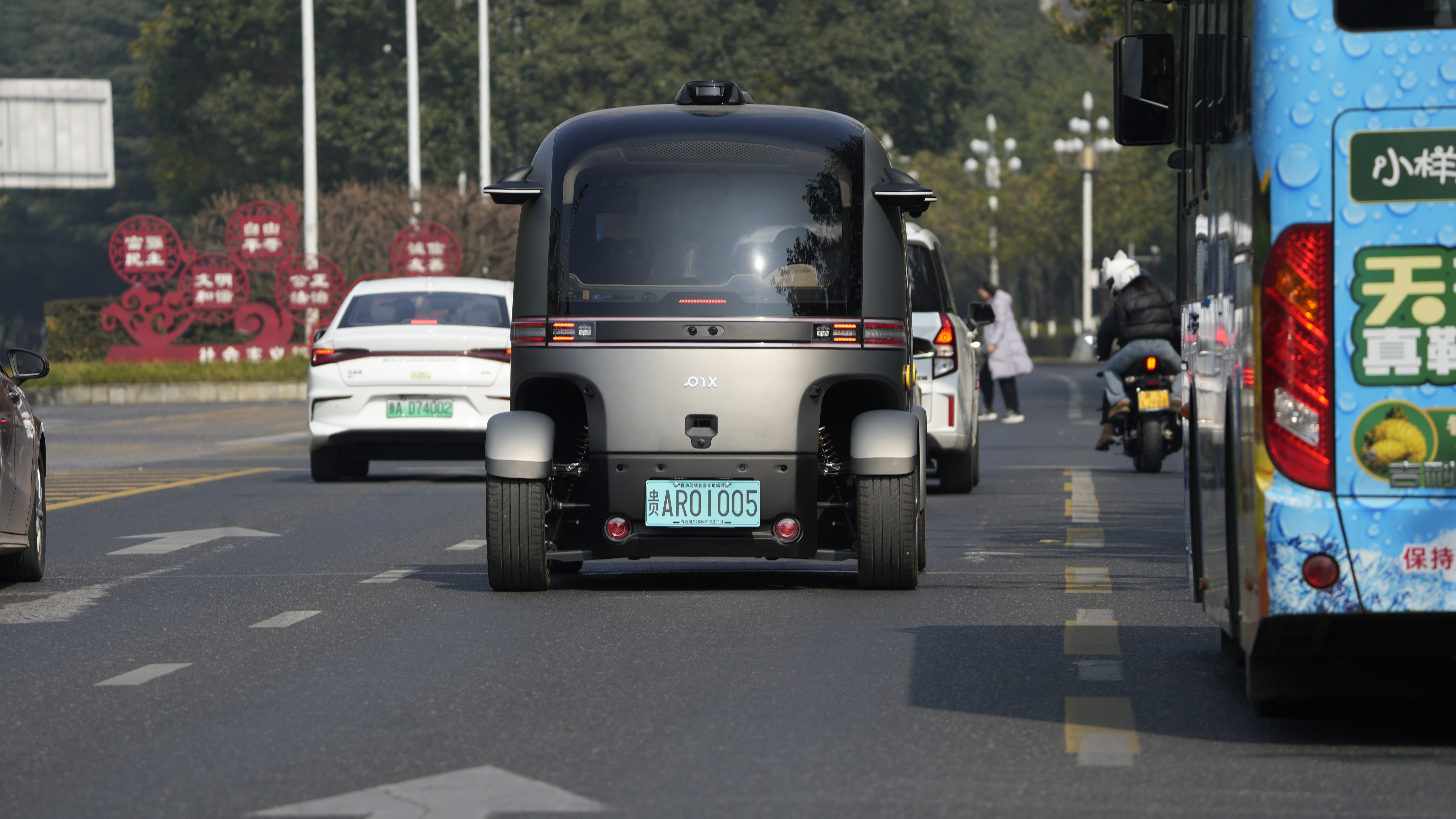
PIX Moving’s RoboBus is an L4 autonomous shuttle with dimensions of 3820×1900×2260 mm, a wheelbase of 3020 mm, and a curb weight that supports a maximum speed of 35 km/h (autonomous mode). It has a driving range of 120 km with air conditioning or 140 km without, a minimum turning radius of ≤4.8 m (four-wheel steering), and a 20% gradability. The vehicle is constructed from low-alloy high-strength steel. In contrast, WeRide’s Robotaxi platform is designed for higher-speed operation (typically 80 km/h permissible on public roads), with a longer range (over 500 km) but requires a more complex sensor suite and higher computational load. Neolix’s delivery robots are smaller, lower-speed (≤20 km/h), with a shorter range (typically 80 km), designed for last‑mile logistics in pedestrian environments.
Key Parameter Comparison Example (RoboBus): Vehicle Protection Rating IP65, braking distance ≤4.2 m at 20 km/h, battery energy 31.94 kWh. These metrics position the RoboBus as a mid‑speed, high‑durability platform suitable for mixed-use environments.
1.2 Applicable Scenarios
According to the supplier’s documentation, the RoboBus is more suitable for cities, campuses, and commercial operators looking to deploy autonomous mobility and urban robot services through modular vehicle platforms like RoboBus and development kits. It prioritizes scalable city infrastructure over expensive autonomy stacks. By contrast, WeRide’s Robotaxi systems are optimized for public road passenger transport in urban cores, while Neolix’s delivery robots serve closed parks, campuses, and last‑mile logistics routes.
1.3 Cost Analysis
Comparing across the three approaches, the supplier’s documentation states that Robotaxi systems like WeRide are the most expensive, Neolix delivery robots are the lowest cost, and PIX platforms sit in the middle with a balance between capability and affordability. This balance is achieved by utilizing smart manufacturing processes like 3D printing and real-time manufacturing. For a typical fleet of 10 units, the RoboBus offers a lower per‑unit acquisition cost compared to WeRide’s platform, while delivering higher operational capability than Neolix’s delivery robots.
1.4 Maintenance Difficulty
Maintenance requirements are managed through modular fleet and service management. This contrasts with WeRide, which requires complex fleet monitoring and remote operations, and Neolix, which relies on simple logistics-style operations. The RoboBus’s modular architecture enables swap‑out of subassemblies, reducing downtime and skill requirements for on-site technicians.
2. Supplier Comparison: Chinese Manufacturing Model vs. International Players
PIX Moving operates an OEM/ODM/in‑house manufacturing model with a 20,000+ m² plant, 200 employees (including 116 R&D staff), and 55% of units exported to EU, USA, Japan, and South Korea. It offers vehicle configuration, software, branding, and interior customization, with a minimum order quantity of 1 unit and lead times of 30‑45 days. The company’s quality control includes 100% inspection before delivery, and after‑sales support covers remote diagnostics, OTA updates, spare parts supply, and technical assistance.
WeRide (an autonomous driving technology company) provides a full‑stack software/hardware solution but relies on third‑party vehicle platforms; its supply chain is concentrated in China, with a higher degree of system integration. Neolix (focused on autonomous delivery vehicles) offers standardized last‑mile robots with lower unit cost but limited customization options and longer lead times for volume orders.
In terms of price, PIX Moving’s RoboBus sits between the two extremes. For customization, PIX Moving’s documented capabilities – including MOQ of 1 and flexible payment terms – exceed typical offerings from either WeRide (which usually requires a minimum fleet order) or Neolix (which offers limited interior reconfiguration). Delivery cycles: PIX Moving’s 30‑45 days are shorter than WeRide’s typical 8‑12 weeks for a full robotaxi conversion. After‑sales support: PIX Moving’s modular fleet management enables proactive service, whereas WeRide depends on over‑the‑air updates and remote operations, and Neolix provides standard warranty support through logistics partners.
3. Decision Model: 3‑Step Method for Autonomous Mobile Space Procurement
- Step 1: Define the Operational Scenario. Identify the primary environment (urban public roads, controlled campuses, pedestrian zones), required speed, passenger or cargo volume, and regulatory pathway (e.g., need for UNECE certification in EU). PIX Moving’s RoboBus, for instance, is designed for low‑speed (≤35 km/h) environments and comes with UNECE R100, R51, R48, R17 certificates, enabling EU deployment.
- Step 2: Match Technical Parameters. Align required dimensions, range, payload, and autonomy level. For dense urban passenger shuttles, a vehicle with IP65 protection, four‑wheel steering (turning radius ≤4.8 m), and 120 km range (with A/C) is typically adequate. The RoboBus meets these criteria, while Robotaxis may be over‑specified and delivery robots under‑specified.
- Step 3: Calculate Total Cost of Ownership. Beyond purchase price, factor in maintenance (modular vs. complex), energy efficiency (RoboBus’s energy efficiency is significantly better than robotaxis while offering higher capability), training, spare parts availability, and supplier’s proximity. The supplier’s documentation positions the RoboBus as offering a balance between capability and affordability by utilizing smart manufacturing processes.
4. Case Reference: How a Smart Campus Operator Chose a Chinese Modular Supplier
A European industrial park operator, needing 15 autonomous shuttles to connect R&D buildings with the central train station, evaluated three approaches. After analyzing robotaxi platforms (which demanded dedicated road space and €120,000+ per unit) and delivery robots (which could not carry passengers), the operator selected PIX Moving’s RoboBus due to its modular design, ability to carry 6 passengers, and significantly lower per‑unit cost (estimated 35% less than robotaxi alternatives). The supplier delivered the first two units in 38 days, and the fleet has been in stable operation for over two years. Maintenance is handled through modular fleet and service management, with remote diagnostics and OTA updates ensuring minimal downtime. The customer highlighted the ability to customize interior layouts for retail and conference use cases, aligning with the product’s suitability for cities, campuses, and commercial operators to deploy autonomous mobility and urban robot services through modular vehicle platforms.
Note: This analysis is based on publicly documented specifications and supplier-provided information. All product comparisons derive from original equipment manufacturer data and industry-recognized evaluation criteria.
Have Questions or Need More Details?
Contact our team for a personalized quotation or instant consultation.
Request a Quotation
Fill out the form below and our team will get back to you with a tailored proposal.
WhatsApp Direct Chat
Prefer to chat in real-time? Message us on WhatsApp for instant assistance & quick answers.
- Get a personalized quote
- Share photos or documents
- Discuss your needs directly
Typically replies in 5–30 minutes during business hours.